20/10/2026 03:47
Tall Tap or Short Tap? A TikTok Video-Cover Workflow for Cambodian Fittings Shops
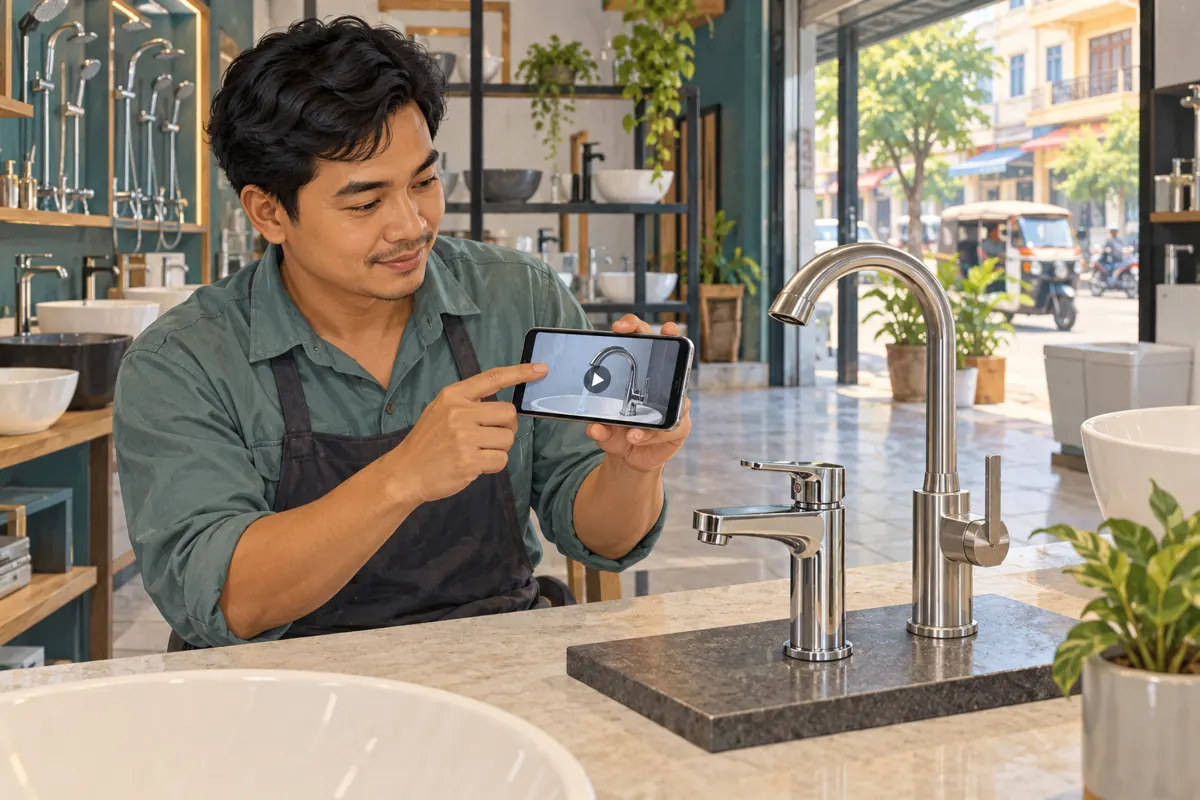
A shopper remembers the tall tap shown beside a countertop basin, then opens your TikTok profile and finds several videos that look almost identical. Every cover shows shiny metal, running water and the same shop counter. The demonstration may answer the shopper’s question, but finding it has become another task. For Cambodian bathroom-fittings businesses, a useful video cover should make the product and the purpose of the demonstration recognisable. This workflow explains how to choose that frame, check it with another person and judge the result without confusing engagement counts with customer understanding.
1. Give the cover one clear job
Start with the question a returning visitor is trying to answer: which video shows the tap I was considering? A cover does not need to communicate the complete specification, current stock, delivery arrangements and installation requirements. Its immediate job is to help someone recognise the relevant demonstration among neighbouring posts.
TikTok’s Help Center describes a video cover as the preview thumbnail used in places such as profiles and search results. That makes cover selection a practical navigation decision. It does not establish that a particular frame will improve distribution or produce enquiries. Treat the following workflow as an editorial method for making your shop’s videos easier to identify.
2. Define the difference customers need to see
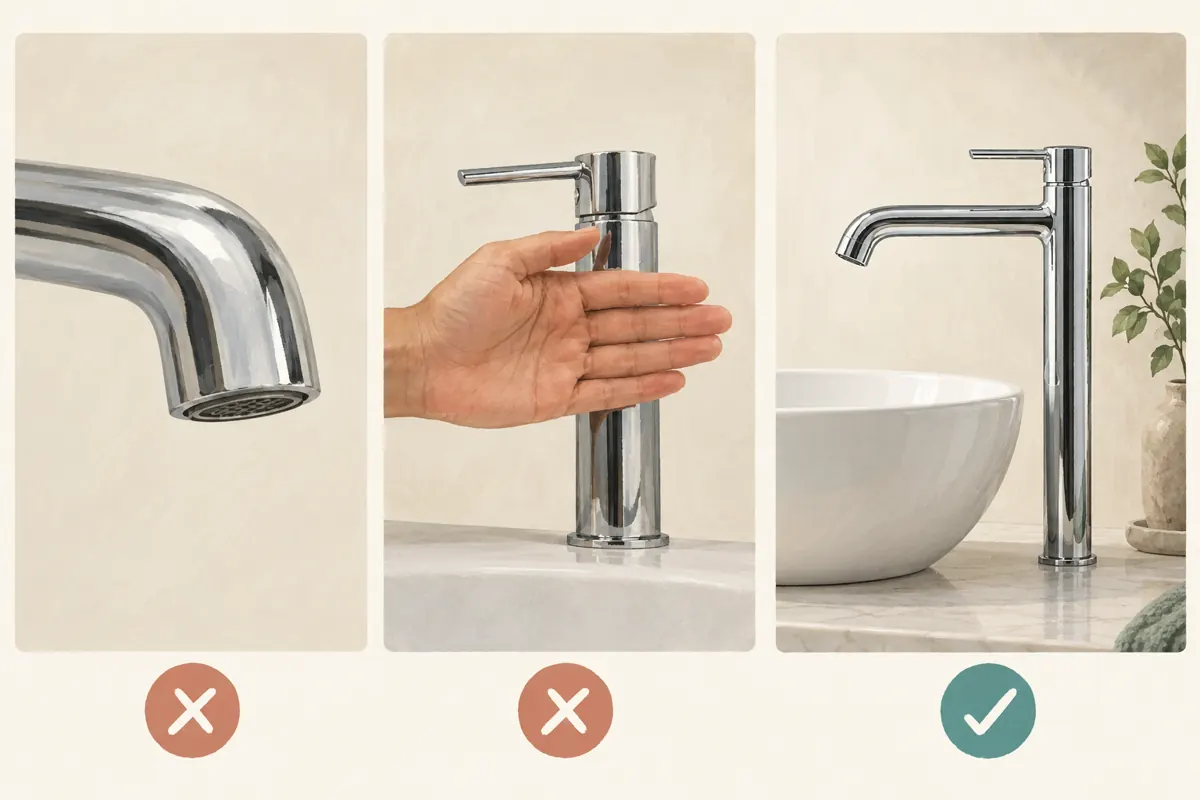
In a hypothetical Phnom Penh fittings shop, staff have filmed separate demonstrations of a tall basin tap and a shorter model. Both have a chrome finish and a single lever. A tight shot of either spout looks attractive, but removes the height difference that customers need to recognise. The editor chooses a wider side view showing the body, spout and basin rim.
Before selecting a frame, write a private sentence describing the distinction: this video shows the tall model beside a countertop bowl. If the useful distinction is instead a wall mounting or a different handle arrangement, show that feature. Avoid relying only on colour, especially when reflections make two finishes look similar. Keep the product reference consistent with the shop’s own stock records.
3. Record a usable still within the demonstration
Cover selection becomes difficult when every moment contains movement, an obstructing hand or a close-up without context. During filming, pause briefly with the product fully visible. Show the feature that distinguishes it, then continue the demonstration. This gives the editor a deliberate frame to select without adding an unrelated promotional image.
For a tap-height demonstration, position the camera so the spout and basin edge are visible together. Remove packaging that hides the base and avoid strong reflections that erase the outline. Keep the setup honest: a display arrangement illustrates that arrangement, not compatibility with every customer’s basin. Explain any measurements or fitting requirements in the video itself.
4. Choose between three candidate frames
Review three moments from the finished video: a whole-product view, a feature close-up and a view showing the product in context. Ask what each one lets a visitor identify. The whole-product frame may distinguish the silhouette; the close-up may explain a handle; the contextual view may show why height matters. Choose according to the video’s actual question.
Reject a frame if the presenter’s hand hides the important feature, the product is blurred or the composition suggests something the video does not demonstrate. A dramatic splash can overwhelm the tap’s shape. An attractive display with several models can make the subject ambiguous. When two frames are equally clear, favour the one that stays understandable at a small size.
5. Set the cover before posting
TikTok documents the following process for a new video: on the post screen, tap Select cover on the thumbnail, move the selection to the desired frame in the video and tap Save. Complete this check before publishing. The official reference for these steps is TikTok’s Editing, posting, and deleting help page, listed in the sources.
After saving, inspect the selected preview again. Confirm that it belongs to the final video and shows the intended model. If you return to editing and replace footage, repeat the cover check. Do not build the workflow around an assumption that every account will offer the same cover-editing options after publication; inspect the controls actually available to your account.
6. Use short labels only when they resolve confusion
A clear silhouette may be enough. When similar models still need a label, use a short product distinction or the reference customers will use when enquiring. Prepare any necessary on-video label during editing and inspect the selected frame afterwards. Keep it away from the defining feature. A label covering the spout defeats the purpose of showing spout reach.
For a shop serving Khmer-speaking customers, have a fluent staff member check that the wording sounds familiar and remains readable on a phone. Keep genuine model codes unchanged. Avoid squeezing Khmer and English descriptions, a price, a phone number and a slogan into one frame. Put fuller information in the accompanying content, where readers have room to understand it.
7. Run a recognition test without coaching
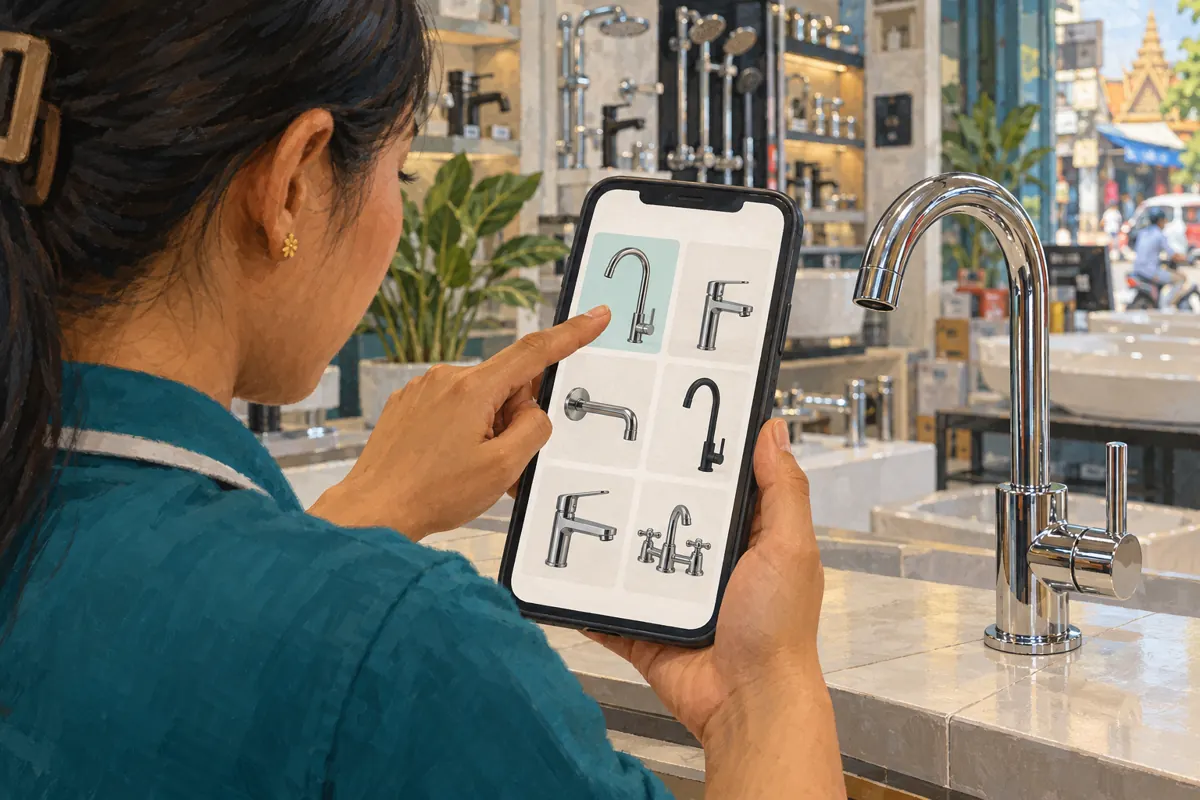
Show the candidate cover alongside a few existing product covers at approximately the size they appear on a phone. Ask a colleague who did not edit the video to find the tall tap shown beside the bowl. Do not point at the answer or explain your colour system first. Watch which visual feature the person uses.
In the hypothetical shop, the colleague selects a shorter model because its cover also contains a large basin. That reveals a useful problem: the basin dominates both images while the tap bodies are too small. The editor reframes the tall model so its full height is visible. This is an illustrative usability exercise, not a measured performance result or evidence about Cambodian shoppers generally.
8. Check the promise after the cover
Open the video after looking at its cover. The product, finish and demonstration should agree. If the cover shows a tall chrome model but the video quickly switches between several products without identifying them, the visitor still has to solve the original problem. Add clear spoken or visual identification within the demonstration before sharing it more widely.
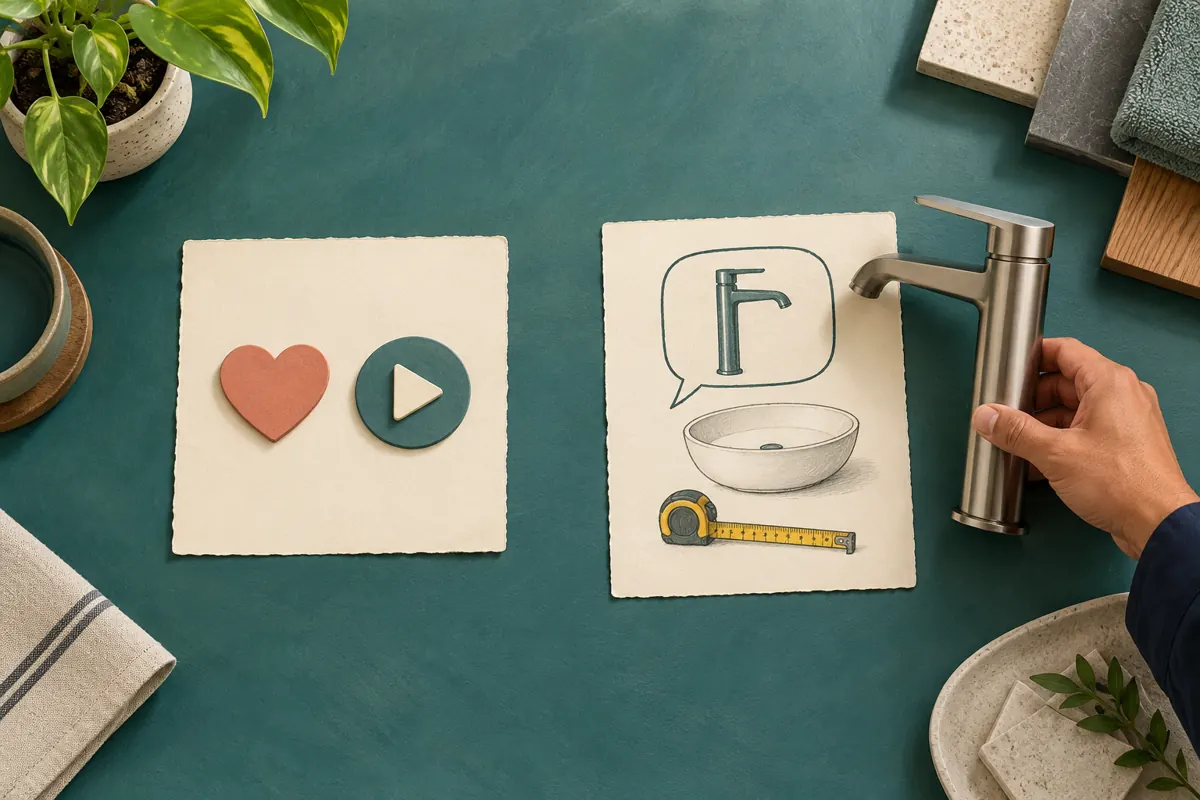
Give the viewer a practical next step. A hypothetical enquiry prompt might ask for the tap reference and a photo of the existing basin, without promising compatibility from the image alone. For Cambodian customers arranging pickup or delivery, discuss the relevant location in the enquiry conversation. The cover helps identify the item; staff still need to confirm specifications, availability and fulfilment details.
9. Make an SMM decision based on the actual problem
If visitors cannot recognise the correct demonstration, purchasing engagement does not repair that confusion. First decide whether the problem is identification, missing product information or an unanswered enquiry. Each needs a different response. Improve the cover for identification, revise the demonstration for missing information and assign staff time for enquiries. None requires an engagement order.
One exact public catalogue title in the brief is “TikTok Likes ~ 𝗛𝗤 𝗔𝗰𝗰𝗼𝘂𝗻𝘁 ~ Max 1M ~ 20k/Days ~ Instant ~ 𝐍𝐎 𝗥𝗘𝗙𝗜𝗟𝗟”. Its title identifies a likes offering, but the supplied description is empty. The quality, quantity and delivery wording should not be treated as independently verified evidence. It provides no basis for claiming Cambodian viewers, interested buyers or official TikTok affiliation.
TikTok’s Integrity and Authenticity guidelines prohibit services that artificially increase engagement and state that fake likes, followers and other inflated signals may be removed. For this workflow, do not use purchased likes as a cover test. Purchased engagement is not evidence of genuine interest, sales, ad delivery or Cambodian users. Keep any existing panel delivery record separate from customer-enquiry notes.
10. Review confusion rather than chasing a winning thumbnail
After publication, inspect the cover in the shop’s profile and open the post to confirm the match. During normal enquiries, note whether customers identify the model correctly or send a different video from the one they describe. Record the misunderstanding in plain language, such as customer confused the wall-mounted model with the countertop model. Avoid collecting unnecessary personal information.
Use repeated misunderstandings to guide future filming. If customers identify the model but still ask about spout reach, the next demonstration needs better measurement information. If they cannot locate the model, revisit the cover. A change in likes or views alone cannot isolate the cover’s effect because the topic, posting context and audience may also differ. Do not describe an informal comparison as a controlled experiment.
11. Avoid repairs that create a larger problem
Common mistakes include using the same generic cover for every product, making a model code too small to read and selecting an image of a finish that is absent from the video. Another is using temporary sale information as the largest element on an otherwise useful evergreen demonstration. Once the offer changes, the cover can become a source of confusion.
If an existing cover is misleading, inspect the editing options available before deciding what to do. Do not delete and repost automatically: customers or staff may already be using the current link. If replacement becomes necessary, record the new destination and update references you control. Review any related service record separately; do not assume a panel order transfers to a replacement post.
Frequently asked questions
Should every tap video use the same cover layout?
A consistent style can help staff prepare content, but leave room for the product’s important difference. A wall-mounted tap may need a different angle from a countertop model. Keep useful elements consistent, such as label placement and background simplicity, while choosing the view that makes each demonstration recognisable.
Is running water the best image for a tap cover?
Only when it helps communicate the subject. Water may be relevant to a demonstration of the outlet or operation, but it can distract from height, mounting position or handle shape. Select the frame that identifies the video accurately. Avoid implying that a visible stream proves performance in a customer’s different installation.
Can I change a cover after the video is published?
This workflow uses TikTok’s documented selection process before posting. For an existing video, check the editing controls available in your own app rather than assuming a universal option. If a correction requires replacement, consider existing customer links and staff references before acting. Preserve an accurate record of which post is current.
Should the cover include a price?
Include one only when it is accurate, clearly scoped and practical to keep current. A price without explaining the included item can create an avoidable enquiry problem. For a lasting demonstration, a model reference or product distinction is often more useful. Confirm current prices and package contents when responding to customers.
How can a small shop judge whether the cover is clearer?
Start with the recognition task: can another person find the intended demonstration among similar covers? Then review actual misunderstandings during enquiries. These observations can reveal problems worth fixing, but they do not prove a sales increase. Keep the question narrow so the result leads to a specific editorial change.
Do more purchased likes show that the chosen cover worked?
No. They do not establish that visitors recognised the model, understood the demonstration or intended to buy. They also raise the platform-policy concerns described above. Judge clarity through recognition and relevant questions, and treat any panel status as a record of a service request rather than proof of marketing effectiveness.
Explore the current service catalogue, create an account, or ask a specific question through support tickets.
- TikTok Help Center: Editing, posting, and deleting — adding a video cover
- TikTok Community Guidelines: Integrity and Authenticity — deceptive behaviors and fake engagement
Prepared with AI assistance. Illustrations explain the workflow and do not represent customer results.