22/10/2026 01:30
Texture, Light or Fit? Telegram Story Albums for Cambodian Curtain Shops

A curtain shop can publish attractive samples every week and still leave customers unsure which fabric they saw. A close-up shows texture, a room photograph shows styling, and a measuring demonstration answers a different question. When these stories sit together without a clear structure, buyers must reconstruct the explanation themselves. For a Cambodian shop promoting its Telegram presence, story albums offer a practical way to organize that material. This guide uses a hypothetical curtain business in Phnom Penh to explain how to build albums around buying questions, test them before promotion, and evaluate enquiries without treating an SMM service’s delivery as evidence of customer demand.
1. Choose the customer question before choosing the album
Begin with the uncertainty that interrupts an enquiry. In our hypothetical shop, customers send screenshots and ask whether the pictured curtain is sheer, whether the colour is available, or which measurement the shop needs. These are separate decisions. An album called “New” does little to distinguish them, especially when its contents remain visible after the original announcement has become old.
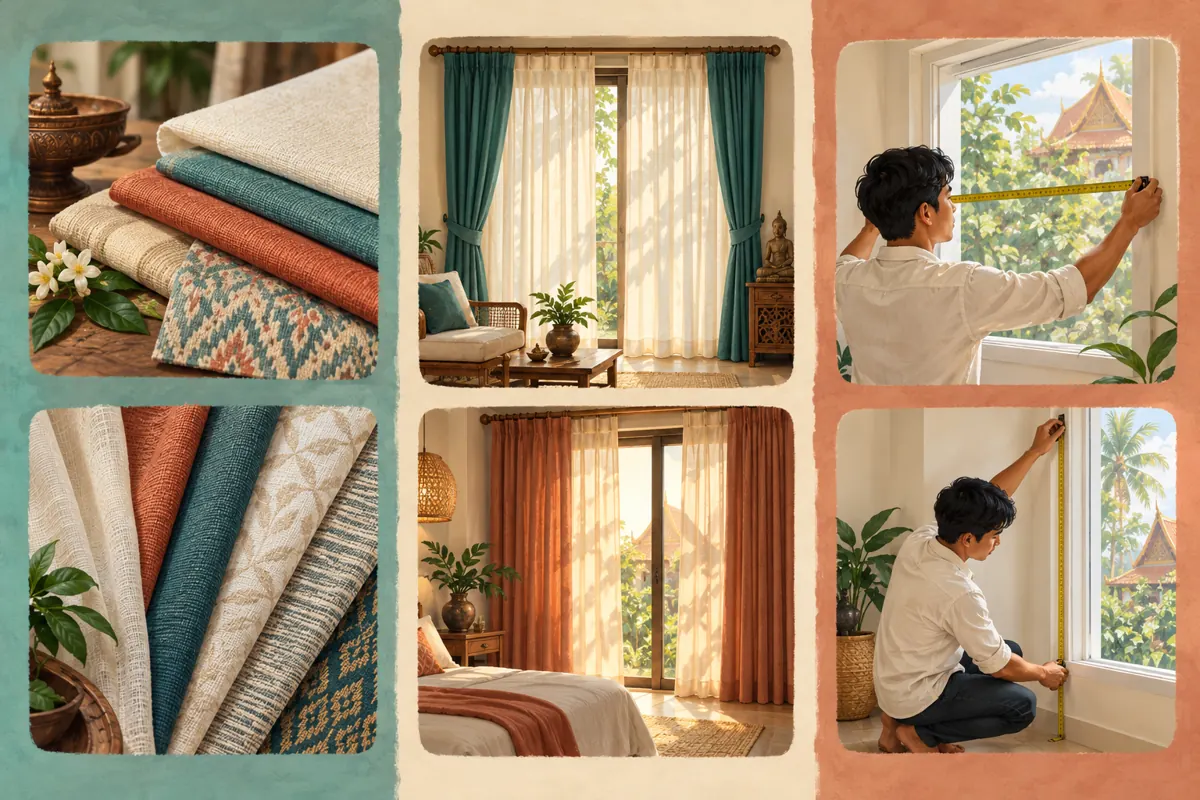
Start with three proposed groups: “Fabric details,” “Light demonstrations,” and “Measuring your window.” These are illustrative English labels; the shop should use wording its actual customers understand. Give each group one clear job. Fabric details help someone identify a sample. Light demonstrations explain the filming conditions and visible effect. Measurement guidance helps someone prepare an enquiry. If an item answers none of these questions, leave it outside the first version rather than expanding the structure around it.
2. Confirm that the shop can use channel stories
Telegram’s official story-album announcement says users can group stories on profiles and channels. It directs users to the Posts tab and then Add Album. Its channel-story documentation separately explains that posting stories depends on the channel unlocking the feature through boosts, with relevant administrator rights and a Telegram Premium subscription for the posting administrator. Check the shop’s current app and channel eligibility before planning production around this format.
Keep this setup decision small. Identify the person responsible for maintaining the albums, confirm which channel represents the business, and inspect the controls available there. Do not promise customers an album that staff cannot yet create or maintain. If channel stories are unavailable, organize the same approved material into ordinary channel posts while resolving eligibility. The customer-question structure remains useful even when the presentation changes.
3. Audit existing stories before grouping them
Review each candidate story against the physical sample and the shop’s current offer. Record its sample reference, what it demonstrates, whether that sample is still offered, and any condition that could confuse a buyer. A beautiful installation photograph may show a discontinued fabric. A useful measuring demonstration may include an old delivery promise. Either problem deserves attention before the story becomes part of an enduring reference collection.
Sort the candidates into ready, needs revision, and unsuitable. Keep original photographs or videos available so staff can remake unclear material without copying a compressed screenshot. Exclude customer interiors unless the shop has permission to use them publicly, and remove visible addresses or private order details. In the hypothetical shop, a current fabric close-up is ready, a dim light demonstration needs revision, and an expired sale announcement is unsuitable. Those decisions concern usefulness and accuracy, not visual polish alone.
4. Give every sample a stable identity
Use a short internal sample reference consistently across the swatch, story caption, and enquiry notes. For example, the hypothetical shop might label one fabric “C-07.” That is an invented reference, not a product offered by this website. A customer can then ask about C-07 even if their screen makes its warm grey colour look beige. Colour names remain helpful, but they should not carry the whole identification task.
For each sample, prepare a clear overall view and a closer view of the weave or pattern. Keep the fabric orientation consistent so a stripe does not appear to change direction between images. Explain whether the image shows loose fabric or a finished curtain, and whether visible lining or accessories are included. Do not imply exact colour reproduction across phones. Where colour matching matters, offer a physical sample check before final approval.
5. Make light demonstrations comparable and honest
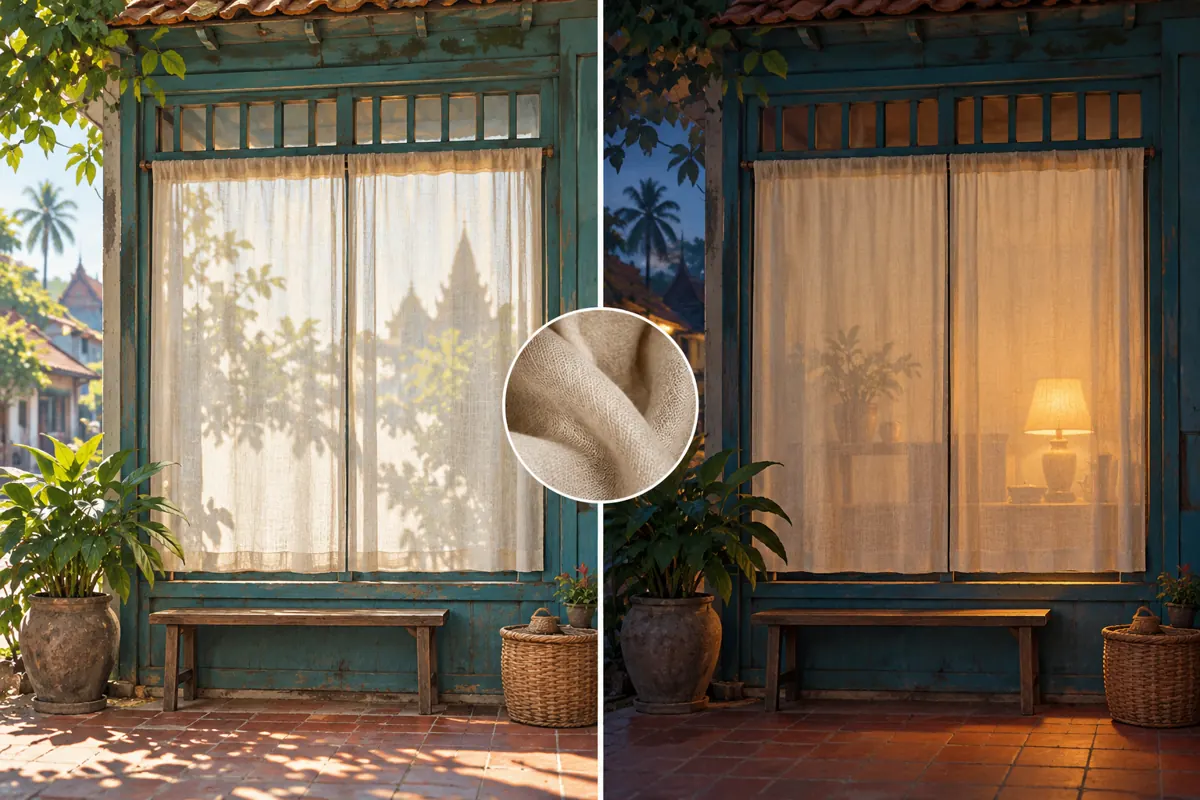
A curtain photographed against a bright window can look different from the same fabric under indoor lighting. Label the situation in ordinary language: daylight through the sample, indoor light behind it, or a room view with the curtain partly open. Avoid turning an attractive image into a technical blackout or privacy claim unless the shop has suitable evidence for that claim.
For a hypothetical comparison, film two samples at the same window during the same session, using a consistent camera position. Check whether the phone automatically changes exposure enough to make the comparison misleading. If conditions change, say so instead of presenting the clips as a controlled test. Include a view showing how the fabric hangs, since folds and coverage affect what the customer sees. The album should help someone choose what to inspect next, while leaving room for a sample demonstration at the shop.
6. Assemble a small album and test its visible sequence
Use the documented Posts and Add Album route to group the approved stories. Begin with one album so staff can inspect the actual result before repeating the process. Choose a name that describes the customer’s task. “Fabric details” is easier to interpret than an internal collection code that only the owner recognizes. Open the finished album and check which story appears first and how the remaining material reads.
Make each story understandable on its own. Repeat the sample reference where needed, and avoid captions such as “this one is thicker” without identifying the comparison. A viewer may enter partway through or skip a story. If the visible sequence fails to explain the subject, adjust the collection using the controls available in the app, then test again. Keep the first version short enough that staff can review every item whenever the offer changes.
7. Connect browsing to a useful measurement enquiry
An album needs a next step that matches the decision it supports. After browsing fabric details, a customer might send a sample reference and request a closer look. After viewing measurement guidance, they might send a window sketch with units. Ask for the minimum information needed to continue: selected sample, window width and height, what those measurements refer to, and the general delivery area if it affects the service.
In a hypothetical enquiry, “C-07, window opening width 140 cm, height 160 cm, delivery in Phnom Penh” provides a starting point. It is not a cutting instruction or a confirmed order. Staff still need to clarify the mounting arrangement, desired coverage, quantity, and service scope. Tell customers when a measurement is preliminary. Avoid collecting an exact home address publicly, and direct order-specific details to the shop’s established private contact route.
8. Keep the SMM service decision separate
The supplied public catalogue includes “Telegram - Channel/Group Members ~ Max 70k ~ 5k/days ~ 𝗥𝗘𝗙𝗜𝗟𝗟 60D”. Its name identifies it as a channel/group member service, but the supplied description is empty. The title alone does not establish delivery conditions, audience location, genuine interest, or suitability for this shop. Verify current terms and applicable platform rules before considering a request.
A member service is not a documented story-album creation service, and membership should not be confused with Telegram’s channel boost mechanism. Do not assume an order will unlock stories or help buyers understand a fabric. Purchased engagement is not evidence of Cambodian users, sales, ad delivery, or authentic demand. For this workflow, the useful first decision is whether the catalogue experience is ready. If staff cannot explain the samples or answer enquiries, postpone promotional spending and repair those gaps.
9. Test the journey with someone unfamiliar with the collection
Ask a colleague who did not assemble the albums to complete a realistic task from the shop’s public-facing entry point. For example: find the sample shown in a room photograph, locate its light demonstration, and explain what information is needed for an initial quote. Let the colleague navigate without coaching. Observe where they hesitate instead of interpreting a polite “looks good” as a successful test.
Check the experience on an ordinary phone, with sound muted as well as enabled. Confirm that sample references remain legible, the fabric detail is visible, and the contact instruction leads to the intended destination. Record the specific obstacle and one repair: a clearer album name, a replacement close-up, or an explicit measurement label. Repeat the task after the repair. This produces actionable evidence about navigation without inventing audience-performance claims.
10. Maintain the collection and judge enquiries carefully
Assign an owner to review albums when fabrics, prices, included accessories, or delivery arrangements change. Telegram’s Stories guide describes editing story content, including captions and visibility, and managing stories displayed on a profile. Check the relevant controls for the shop’s actual publishing context. After any correction or removal, reopen the album as a viewer and confirm that the misleading information no longer appears.
Keep a simple enquiry log recording the sample mentioned, the question still unresolved, and the next agreed action. Distinguish a sample request, a quotation, and an accepted order. If promotional activity or an SMM order overlaps the review period, record that separately so a counter increase is not presented as proof that the albums caused demand. Improve the collection when genuine conversations reveal a recurring gap. For example, repeated uncertainty about lining calls for a clearer explanation of what the pictured curtain includes.

Frequently asked questions
How many albums should a small curtain shop create first?
Start with the smallest set that resolves distinct questions. In this hypothetical workflow, fabric details, light demonstrations, and measuring guidance serve different purposes. Create one first and test it. Add another only when its content has a clear role and someone can keep it current. A larger collection is not automatically easier to use.
Should every fabric colour have its own album?
Only if customers need that separation and the shop has enough useful material to support it. Otherwise, separate albums can make comparisons harder. Begin with question-based grouping and clear sample references. If customers repeatedly struggle to find a particular range, consider dividing that group using names they already understand.
Can an old installation story stay in the collection?
It can remain useful if the shop has permission to display it and its context is accurate. Clearly identify an installation example when it does not represent current stock or an available package. If viewers could reasonably mistake it for a current offer, revise the explanation or remove it from the buying guide.
Does buying Telegram members make the album more credible?
A purchased member count does not verify fabric quality, demonstrate customer satisfaction, or establish local demand. Credibility in this workflow comes from accurate sample identification, understandable demonstrations, current information, and reliable replies. Keep any service delivery record separate from evidence supplied by genuine customer conversations and fulfilled orders.
What should staff change if customers still send vague screenshots?
Look at what the screenshots omit. If the sample reference is missing, place it more clearly in the story. If customers confuse a room display with the offered package, explain the included items. Ask one focused follow-up question and use the recurring confusion to improve the relevant story, rather than rebuilding the entire collection.
Explore the current service catalogue, create an account, or ask a specific question through support tickets.
- Telegram: Public Post Search, Story Albums, Gift Collections and More
- Telegram: Stories in Channels, View-Once Media and More
- Telegram Stories: Official Feature Guide
Prepared with AI assistance. Illustrations explain the workflow and do not represent customer results.