20/10/2026 17:03
Why Won’t the Size-Guide Link Open? YouTube Shorts for Cambodian Luggage Shops
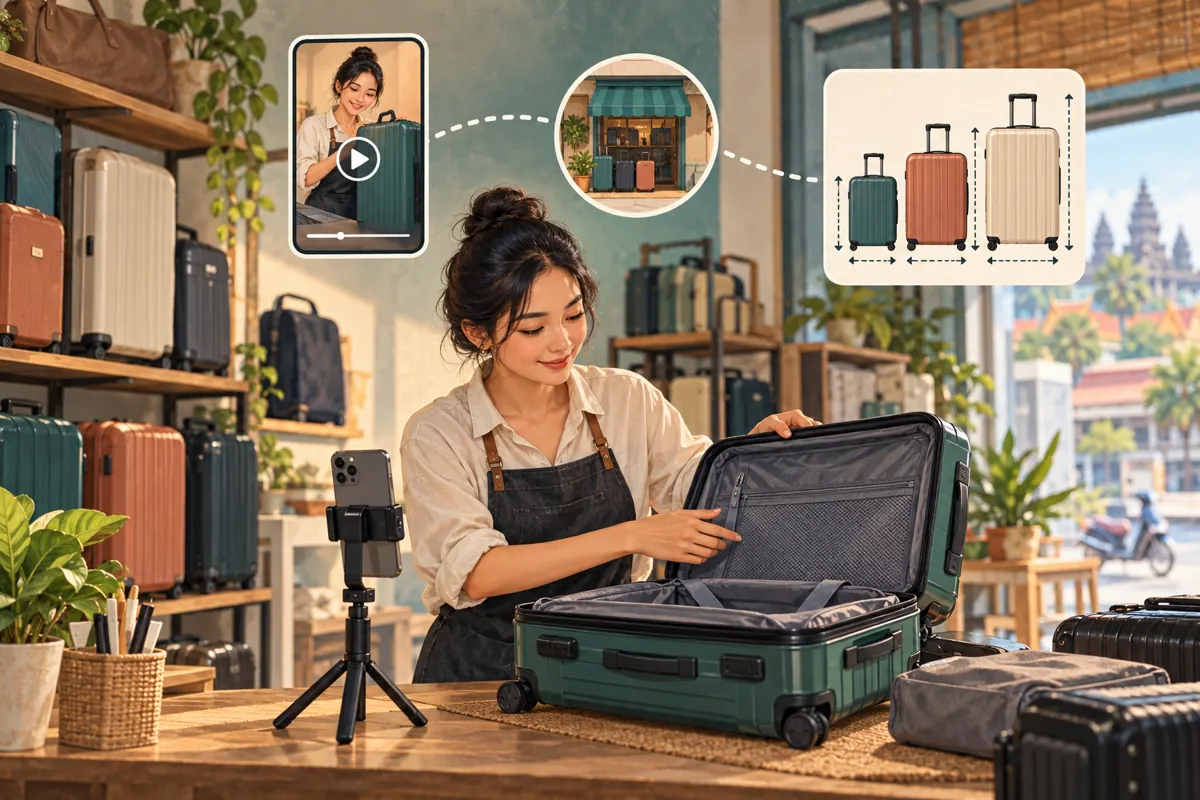
A luggage demonstration can answer one question and immediately create another. Viewers see a suitcase open, then want its external dimensions, available colours or pickup details. If the video tells them to tap a link that does not open, useful attention meets an avoidable obstacle. For Cambodian shops planning social promotion, the practical task is to connect the demonstration to information a visitor can actually reach. This workflow uses a hypothetical Phnom Penh luggage shop to explain how to choose the destination, write accurate instructions, test the journey and evaluate promotion separately from customer enquiries. It also explains why an SMM service cannot repair a broken navigation path.
1. Diagnose the link location before changing the address
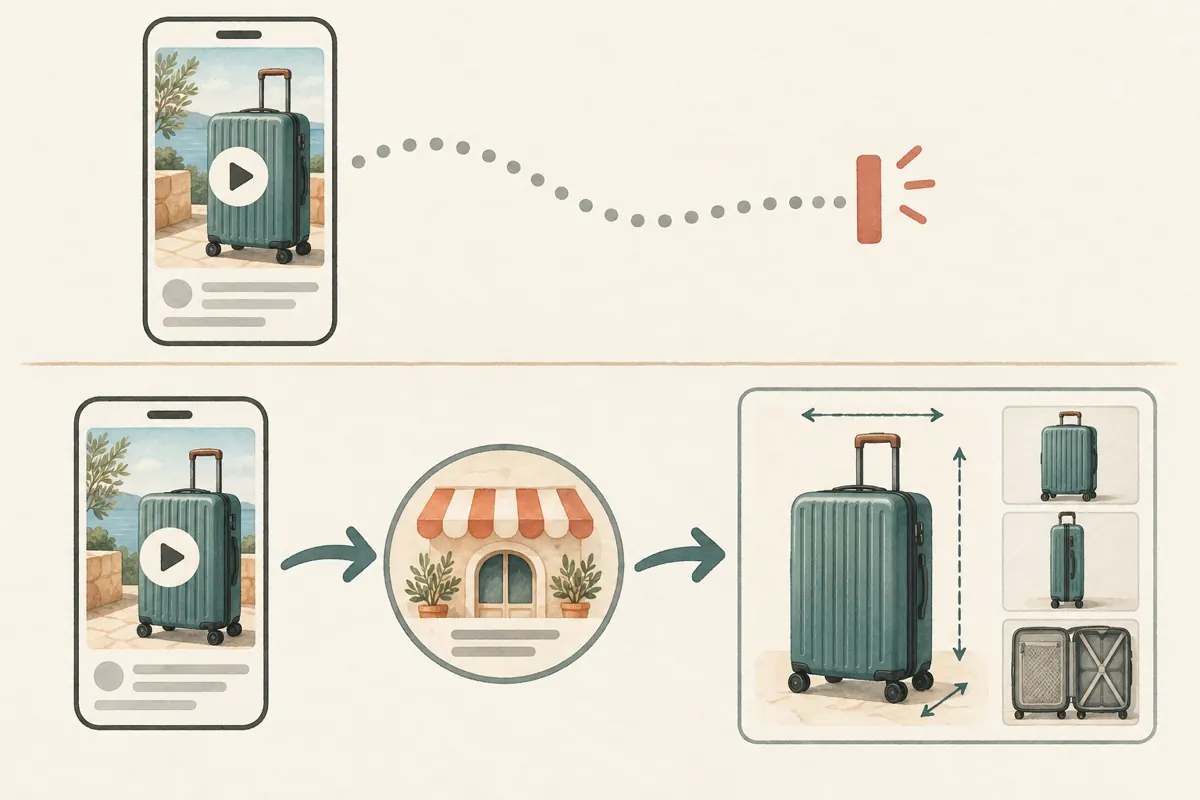
YouTube states that ordinary URLs in Shorts descriptions and comments are not clickable. Its link-sharing guidance lists channel profile links as clickable. Therefore, a perfectly valid shop address can still fail as a tap-based instruction when placed beneath a Short. Changing the spelling, pasting it again or moving it into another Shorts comment does not solve that placement problem. Source: [YouTube’s link-sharing guidance](https://support.google.com/youtube/answer/13748639?hl=en).
Start with the exact complaint. Did the viewer find the address but fail to open it, open the wrong page, or reach a page without the promised information? These are different faults. In the hypothetical shop, a staff member hears that the size chart is unavailable and first checks where the instruction sends viewers. Record the starting screen and the point where progress stops. Avoid immediately blaming the website, the viewer’s connection or insufficient promotion.
2. Decide what the viewer needs after this particular demonstration
Choose one primary next step for the video. A clip showing a suitcase beside a chair might lead to an external-dimensions guide. A clip showing replacement wheels might lead to a repair enquiry page. A general homepage containing unrelated accessories makes the visitor repeat the search. Write the intended outcome in a sentence before choosing a link: the viewer should identify the demonstrated model and find its measurements.
For this hypothetical example, the shop selects a mobile size guide with product photographs, model references and clearly described measurement points. The page explains whether dimensions include wheels and fixed handles. It does not promise that a suitcase meets every airline’s requirements. The Short demonstrates the product; the guide supplies details that would overcrowd the video. This division gives each item a useful job and helps staff avoid adding several competing instructions at the end.
3. Give the profile link a stable, recognisable label
On desktop, YouTube’s documented route is YouTube Studio, Customization, then Profile. Under Links, add the destination title and URL, then publish the change. YouTube says the first profile link receives prominent placement, while remaining links appear through the additional-links view. Choose the order deliberately when the size guide is the campaign’s main destination. Source: [Manage your YouTube channel’s profile](https://support.google.com/youtube/answer/2657964?hl=en).
Use a label that describes the information, such as “Suitcase sizes and model guide,” rather than “Click here” or an unexplained campaign nickname. Keep that label consistent with the instruction in the video. A stable guide can contain clearly separated entries for several models, allowing older demonstrations to remain understandable. Assign someone to maintain it. Avoid replacing the same destination with an unrelated flash sale simply because a new campaign starts; earlier viewers may still arrive expecting measurements.
4. Write an instruction that matches the tested route
For the hypothetical demonstration, the English script could end: “For the measurements, open our channel profile and choose Suitcase sizes and model guide.” Prepare the spoken version in the language actually used by the intended audience, and have a fluent colleague check that the destination label remains recognisable. Keep the article’s workflow separate from any decision about the shop’s website language. There is no need to change the site’s configuration to make this journey clearer.
Show the suitcase’s model reference before the instruction so viewers know which entry to find. Leave enough time for a person to understand the next action, and make the same instruction legible without sound. Avoid pointing toward a supposed button whose location has not been checked in the viewing interface. Ask a colleague to follow the wording literally. If they need the creator to explain what “there” or “below” means, rewrite those words before promotion.
5. Make the destination useful on a small screen
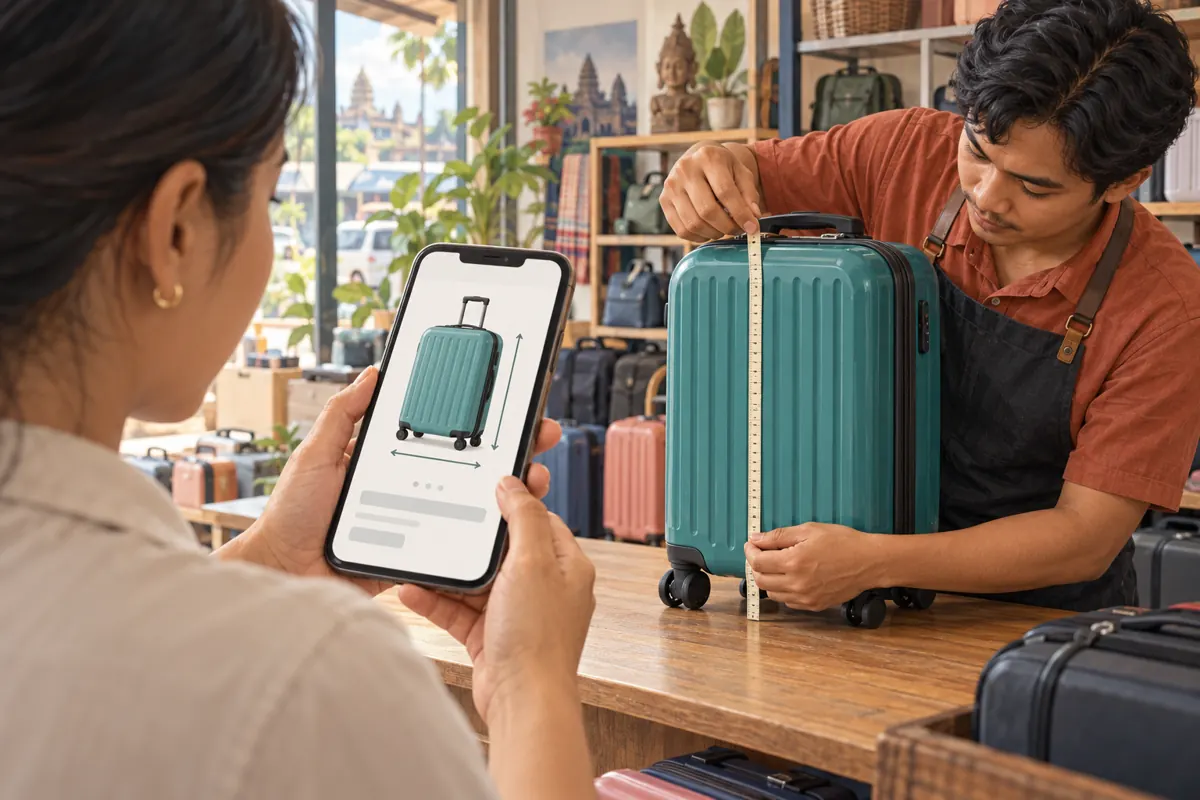
The guide should immediately resemble the product shown in the Short. Place a clear photograph and model reference near the relevant measurements. Explain units consistently and distinguish external size from usable internal space. If the guide contains multiple suitcases, give each a separate entry rather than placing several unlabelled measurements beside one group photograph. A visitor should not need to guess which colour, shell shape or handle belongs to a particular specification.
Then address the practical buying question. State how to ask about current stock and what information to include, such as the model reference and preferred colour. If pickup and delivery are both offered, explain how availability is confirmed without implying that opening the guide reserves anything. For Cambodian customers reading on a phone, prioritise readable text, modest image sizes and an obvious contact route. Test the page on an ordinary mobile connection rather than relying only on the shop’s office setup.
6. Run a visitor test without coaching the tester
Give a colleague the published Short and ask them to find the demonstrated suitcase’s dimensions. Do not start them on the profile page or send the final URL separately: those shortcuts remove the part being tested. Have them use a viewing context that does not depend on channel-management access. Observe whether they understand the instruction, recognise the profile link and identify the correct product after the destination opens.
Record the device, viewing method, destination reached and any confusing step. A useful note says that the tester opened the general catalogue and could not distinguish two similar cases. “Link checked” provides much less guidance. Correct the specific fault and repeat the affected journey. Also test what happens when the destination opens in a browser instead of the expected app. A successful test establishes that this route worked in that context; it does not establish that every viewer will follow it.
7. Review SMM services against the actual objective
The supplied catalogue includes the exact public service name “Youtube ~ Adwords Views ~ Min 1M ~ Super Fast ~ 𝐋𝐢𝐟𝐞𝐓𝐢𝐦𝐞 ~ INSTANT”. Its description is empty. The title labels it as a views offering, but it does not establish the delivery method, Cambodian audience, advertising-account access or website visits. The word “Adwords” in a catalogue title is not evidence of official affiliation or verified ad delivery. Do not treat the title’s other claims as independently confirmed specifications.
Before considering an order, ask what activity is being supplied and whether it serves the shop’s stated objective. YouTube prohibits artificial metric inflation and warns that a hired promoter’s methods can affect the channel. Decline methods that violate those rules. Source: [YouTube’s fake engagement policy](https://support.google.com/youtube/answer/3399767?hl=en). Purchased engagement is not evidence of genuine interest, sales, ad delivery or Cambodian users. No panel status can demonstrate that a customer found the size guide. If the method remains unclear, retain the budget and improve the content journey first.
8. Keep three kinds of evidence separate
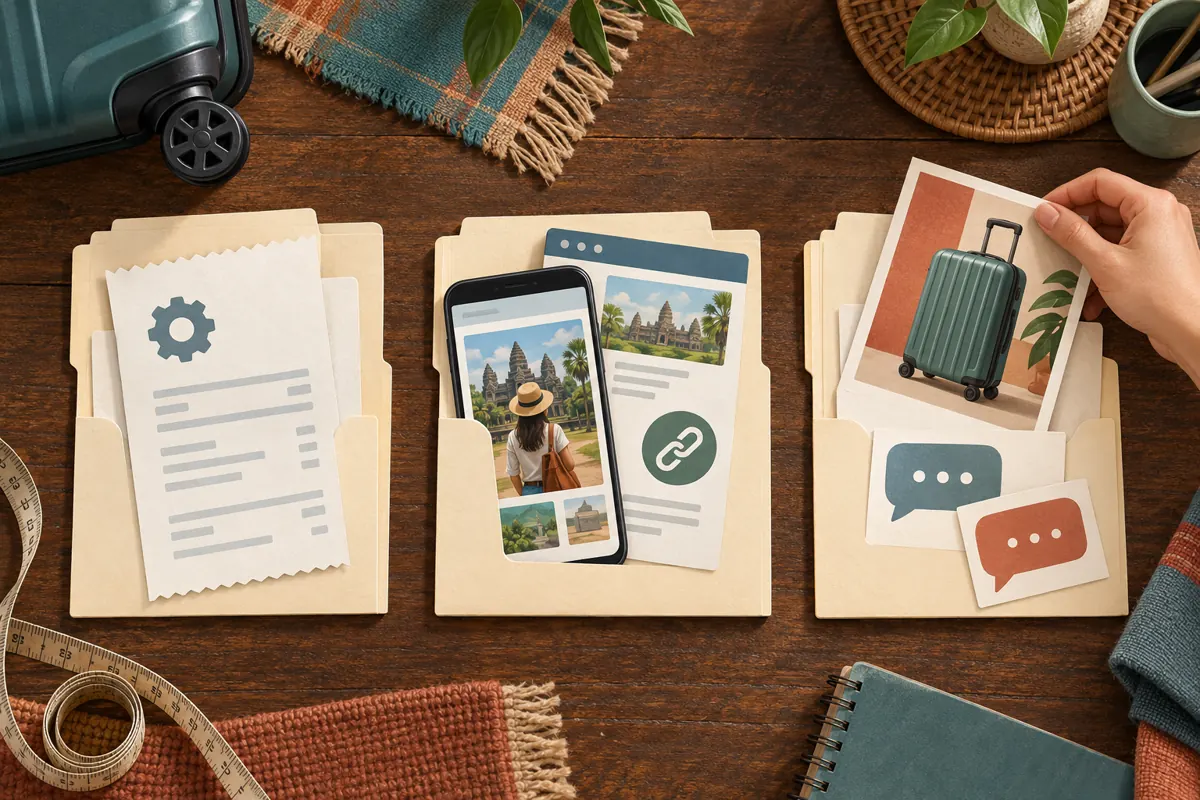
Maintain a short navigation record containing the Short’s address, the profile-link label, the destination address and the latest visitor-test notes. Separately retain any service documentation and order records. In a third record, capture genuine business enquiries using only the information needed to answer them. These records describe different events: an administrative transaction, a working route and a person asking about a product.
In a hypothetical enquiry, a viewer names the demonstrated model and asks whether its wheels are included in the stated height. That question suggests the measurement explanation needs attention. It does not prove the viewer arrived through a particular paid service. If the source matters, ask politely how they found the guide and record uncertainty when they do not know. Avoid declaring a campaign successful merely because a visible counter rose while enquiries happened during the same period.
9. Fix common mistakes at the point where they occur
One common mistake is saying “link in description” because that phrase appeared in another creator’s video, without testing it in a Short. Another is naming a profile link that staff later rename. A third is sending everyone to a broad catalogue while promising the measurements of one case. Each problem has a specific remedy: correct the instruction, stabilise the label or improve the destination. Buying more exposure leaves the original obstacle in place.
Do not use a QR code as the only alternative for people already watching on the same phone; test whether the proposed action is practical for them. Avoid requesting delivery addresses in public comments just to identify interested buyers. Move order-specific details to the shop’s appropriate private contact route. Finally, distinguish illustrative content from customer evidence. A staff demonstration, staged example or generated editorial illustration should never be presented as proof that customers bought or endorsed the suitcase.
10. Set a maintenance trigger before starting promotion
Choose who rechecks the route when a model changes, a page moves or a profile link is edited. The most useful trigger is a relevant change, not a vague promise to review everything eventually. If a suitcase becomes unavailable, keep its identity clear and explain the current situation on the guide. Do not silently replace its measurements with those of a similar-looking product. Visitors following an older demonstration still need an accurate answer.
Before expanding promotion, review the open issues from the visitor test and confirm that staff can answer the enquiries the guide invites. Stop and repair the journey if the destination breaks or becomes misleading. Continue improving the demonstration when genuine questions expose missing information. This creates a sensible decision process: establish the route, test understanding, resolve faults, assess any promotion method and review actual enquiries. The shop gains a usable customer journey without pretending that visibility alone demonstrates demand.
Frequently asked questions
Will a shortened URL make a Shorts description link clickable?
No. YouTube’s restriction concerns the placement of ordinary URLs in Shorts descriptions and comments, not merely their length. A shorter address may be easier to read, but it does not provide the missing tap-based route. Use the tested profile-link instruction instead.
Should every suitcase Short have its own external page?
Only if a separate page makes the information easier to find and maintain. A well-organised guide can support several demonstrations. Give each model a recognisable photograph and reference, and ensure older products remain distinguishable. Avoid creating many thin pages that staff cannot keep accurate.
What if the shop has no website?
Choose an existing public destination the shop can maintain, then test whether visitors can read the promised information there. Check access requirements and the mobile experience. If no suitable guide exists, create the information first or change the call to action to an honest enquiry route.
Can more views compensate for visitors failing to find the guide?
Additional exposure does not correct an unclear instruction or wrong destination. Repair the journey before evaluating promotion. Even after it works, distinguish video activity from guide visits, useful enquiries and confirmed purchases. None of those outcomes should be inferred solely from an SMM order’s delivery status.
How should staff respond when someone says the link is broken?
Ask which screen they started from and what happened after their next action. Determine whether the address was untappable, the page failed to load or the product information was missing. Provide an appropriate direct route privately if needed, then fix the public instructions for future viewers.
Explore the current service catalogue, create an account, or ask a specific question through support tickets.
- YouTube Help: Sharing links with your audiences
- YouTube Help: Manage your YouTube channel’s profile
- YouTube Help: Fake engagement policy
Prepared with AI assistance. Illustrations explain the workflow and do not represent customer results.