22/10/2026 19:32
Share the Outfit, Keep the Pattern? Telegram Content Protection for Cambodian Dressmakers
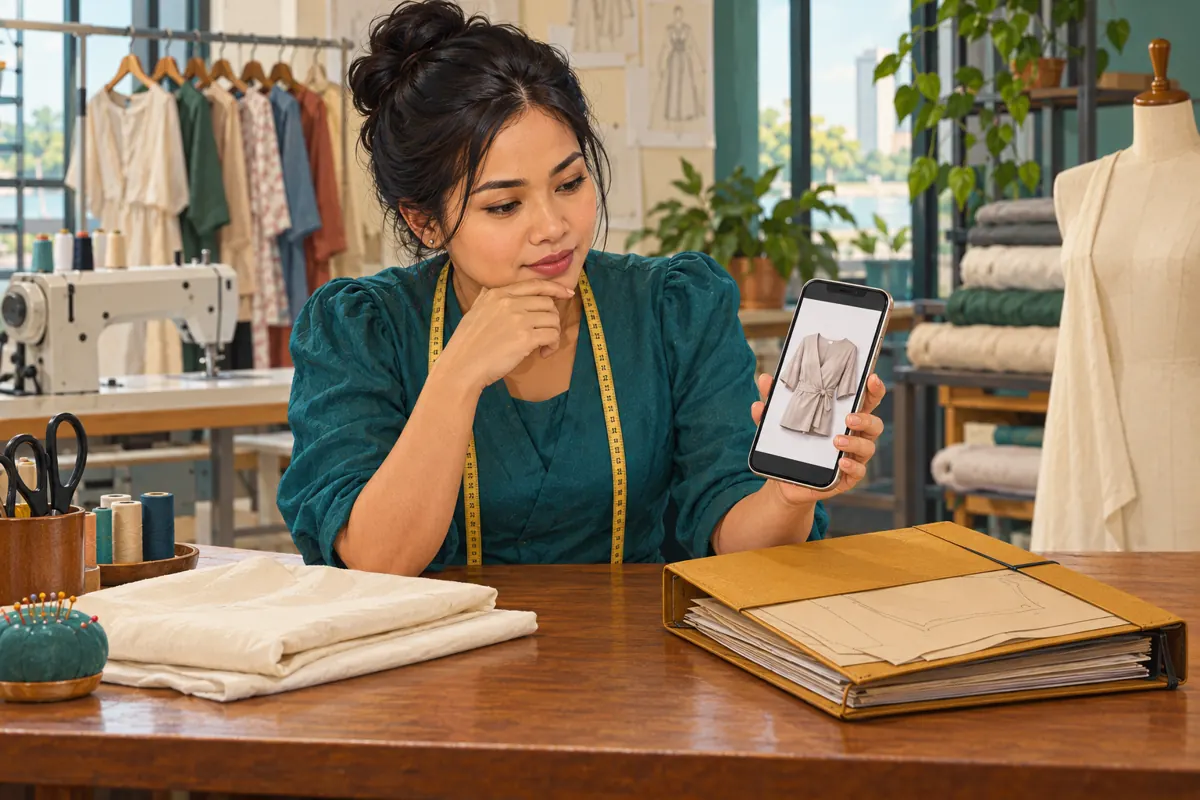
A garment photograph can help someone explain the outfit they want. A cutting pattern serves a different purpose: it may contain workshop instructions that the maker does not intend to circulate. When both appear in the same Telegram channel, a Cambodian dressmaking business faces an awkward choice. Allow easy sharing of everything, or restrict sharing and make the catalogue less convenient for prospective buyers. The practical solution starts with deciding what belongs together. This guide explains how to separate those materials, check Telegram’s content-protection setting, and prepare a useful public promotion. It also explains why an SMM service request cannot resolve a sharing problem or establish that local customers want an outfit.
1. Define what the customer should be able to share
Start with one ordinary buying task. A prospective customer might want to send a blouse photograph to a relative before asking about fabric, sleeves, or a fitting appointment. If that is the intended journey, the public photograph needs enough information to remain understandable when it travels beyond the shop’s immediate audience. Identify the garment, explain whether it is a sample, and provide an approved contact route.
In a hypothetical Phnom Penh workshop, the owner posts finished blouse photographs alongside detailed cutting sheets used by assistants. Customers ask why they cannot forward the blouse pictures. The owner’s first task is to separate those two purposes. Write a simple rule: catalogue photographs may circulate; internal construction sheets belong in the workshop’s restricted space. This rule gives the team a concrete publishing decision before anyone changes a setting.
2. Understand what Telegram’s protection controls
Telegram’s official article, Protected Content, Delete by Date, Device Management and More, describes a setting that restricts forwarding, prevents screenshots, and limits saving media from groups and channels. It gives this navigation path: Group or Channel Info, then Group or Channel Type, then Restrict Saving Content. Interface wording can differ, so check the controls visible in the app being used.
Telegram’s current Content protection documentation identifies this as a group-wide or channel-wide control and says the owner changes it. Treat it as a decision about the whole space, rather than a special restriction attached only to a valuable pattern. The documentation also distinguishes group and channel protection from protection in private chats. Keep this workflow focused on groups and channels; do not assume the same subscription requirements or controls apply everywhere.
3. Sort material before changing the channel
Review the existing material in three practical categories. Public catalogue content includes approved garment photographs, general fabric explanations, and contact details intended for customers. Workshop material includes cutting layouts, construction notes, and unfinished design experiments. Customer-specific material includes measurements, private fitting photographs, and individual order discussions. Decide the destination for each category before preparing another promotional post.
For the hypothetical workshop, the public channel becomes a catalogue of sample garments. A separate restricted workshop space holds selected construction references for authorised staff. Customer-specific records stay out of both promotional content and shared workshop examples unless there is a clear operational need and appropriate permission. This sorting step matters because a protection setting cannot correct an unsuitable audience. Someone who legitimately sees a document may still learn information that the shop never needed to disclose.
4. Make the public sample useful without exposing the pattern
Create a fresh catalogue photograph from the original approved asset. Show the finished garment clearly, including details relevant to choosing it, such as the neckline or sleeve shape. Keep cutting sheets, customer receipts, and measurement notebooks outside the frame. A plain background helps the viewer distinguish the garment’s features without requiring access to the workshop’s working documents.
Give the sample a stable reference that staff can recognise, such as Blouse A, and use that reference consistently in the photograph’s accompanying message. Explain that fabric availability and fitting requirements must be confirmed. For Cambodian customers, prepare the customer-facing explanation in the language they actually use, including reviewed Khmer where appropriate. If the shop also serves English-speaking customers, check that both versions describe the same sample and enquiry process. Translation should preserve whether something is an illustration, an available item, or a custom order.
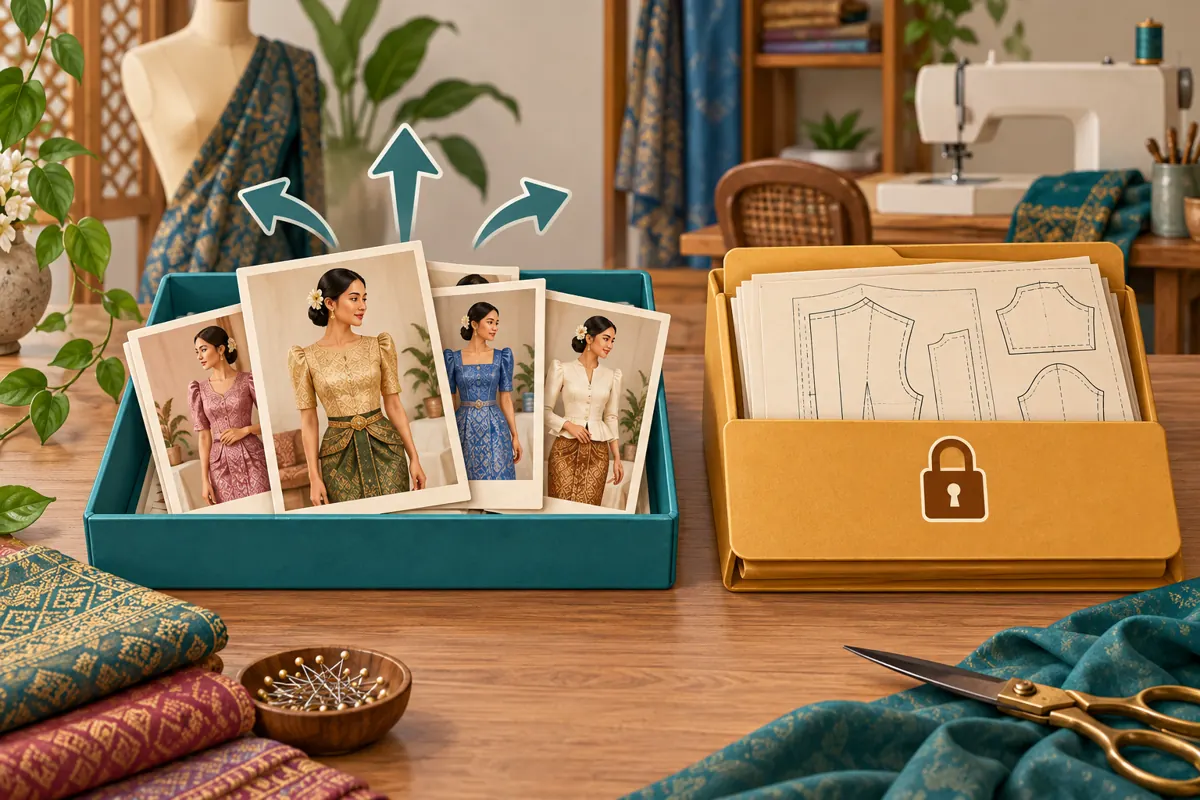
5. Choose protection according to the space’s purpose
For a catalogue intended to encourage voluntary sharing, consider whether restricting forwarding conflicts with the customer’s task. For a workshop space containing material intended only for its members, content protection may support that boundary. Make each decision explicitly and record the reason. The useful question is whether the people using that space need to redistribute its contents to complete an authorised task.
Before changing protection in an established channel, review its history. Earlier posts may include material that was never prepared for wider circulation. Do not disable protection simply to make one new promotional image easier to share. Prepare an approved public version elsewhere when necessary. Likewise, enabling protection does not retrieve copies that were already distributed. Keep original files in the shop’s normal storage so staff do not need to recover production materials from customer-facing posts.
6. Test the experience with a harmless sample
Use a generic garment picture for testing, without customer details or a valuable pattern. Have the owner confirm the intended setting, then ask an authorised colleague using an ordinary member account to check the experience. In the public catalogue, verify that the intended sharing route works and that the accompanying explanation still makes sense. In the protected space, check that the relevant restrictions appear as expected.
Record the device, app version, test date, and observed result in a short internal note. A useful entry says what happened, such as whether forwarding was available, rather than merely saying the channel passed. If behaviour differs from expectations, pause the promotion and investigate with the current app and official guidance. Do not weaken the workshop’s boundary to satisfy a marketing deadline. Owner access alone is insufficient evidence of what an ordinary member can do.
7. Give customers a clear alternative when sharing is restricted
A customer who cannot forward an image may simply need help discussing a garment with someone else. Prepare an approved public sample that staff can provide without extracting material from the restricted workshop space. Explain which reference the customer should mention when contacting the shop. This keeps the enquiry moving while respecting the original purpose of the internal material.
For the hypothetical workshop, the assistant sends the public Blouse A catalogue post when someone asks to share a construction reference. The accompanying explanation says that the photograph shows the finished sample and that fabric and fitting details require confirmation. Staff should create this public material from approved originals. They should not teach customers to bypass protection, photograph another person’s screen, or redistribute documents that were supplied for a limited purpose. A convenient alternative works best when it is prepared before the request arrives.
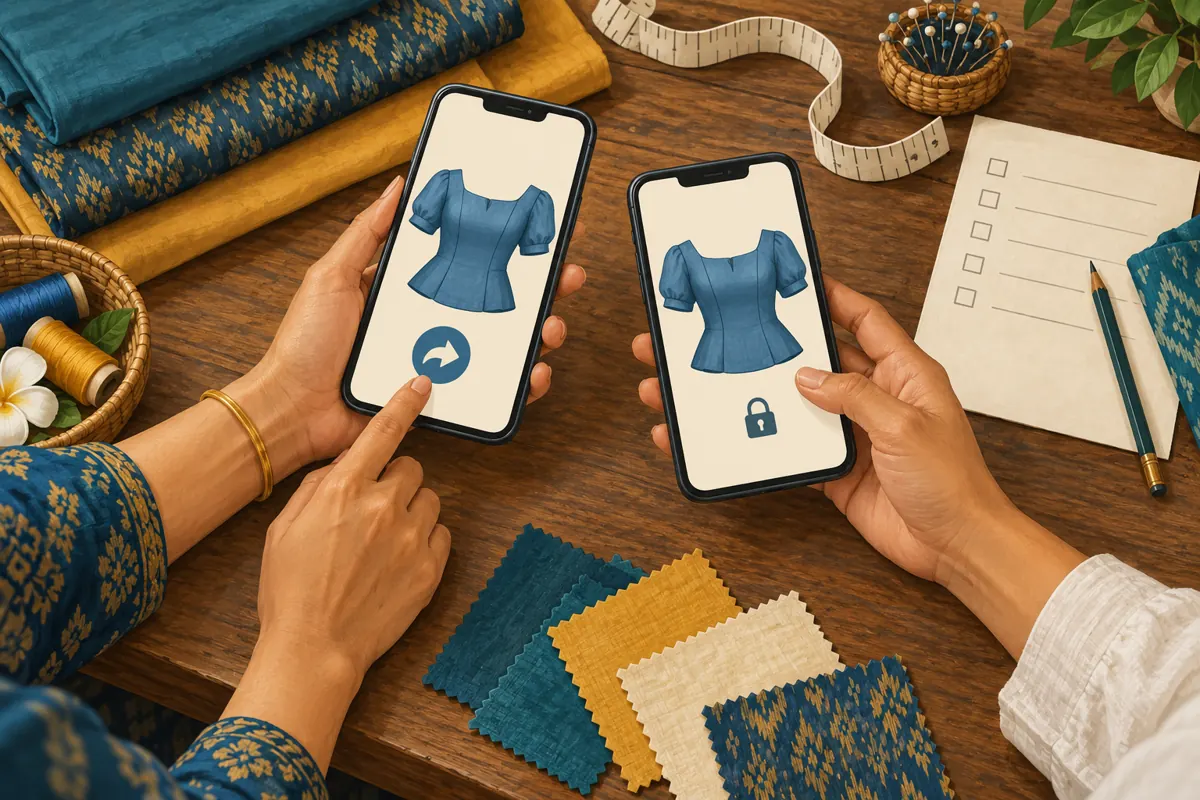
8. Resolve sharing before considering an SMM panel service
The supplied public catalogue includes the exact service name Telegram Post Views. Its description is blank. The name identifies a post-view service, but the supplied information does not establish its delivery method, eligible destinations, audience location, or compatibility with protected content. Do not assume that it reaches Cambodian buyers or can work with a restricted workshop post. Clarify any missing requirements before considering a request.
An SMM service should never become the reason to expose internal patterns. If the intended destination is unsuitable or its eligibility is unclear, stop at that decision. A purchased view count is not evidence of genuine interest, sales, advertising delivery, or Cambodian users. It also cannot make a garment reference clearer or give customers permission to forward protected content. Check applicable platform rules and assess the business purpose independently; choosing no service is a reasonable outcome.
9. Review enquiries separately from delivery records
After sharing the approved catalogue, look for questions that reveal whether people understood it. Did someone identify the correct blouse? Did they ask about an available fabric, a fitting arrangement, or collection location? Keep only the information needed to follow up. These observations can guide improvements to the public sample without claiming that every question represents a future order.
If a panel service was used, keep its delivery record separate from enquiry notes. Do not attribute an appointment to purchased views merely because it happened afterwards. Ask customers how they found the shop when appropriate, while accepting that the answer may be incomplete. In the hypothetical workshop, repeated confusion about whether a sample is ready-made would justify revising the catalogue message. A larger displayed counter would not answer that question or establish demand for the design.
10. Avoid fixes that create a different problem
One common mistake is protecting every space without considering its purpose. That can make approved promotional content unnecessarily difficult to pass along. Another is switching protection off briefly in a mixed channel, overlooking older workshop documents. A third is using a cropped pattern as a teaser when the crop still reveals information the maker wanted to keep internal. Review the actual image, not just its filename or intended label.
Do not describe protected material as impossible to copy. App controls can restrict supported actions, but they cannot guarantee that information visible to another person will never circulate. Also avoid promising staff that a subscription or panel service automatically solves their access requirements. Maintain a simple ownership rule: one person approves the destination, another checks the sample, and everyone uses the same approved public reference. Revisit that arrangement when the shop changes what it sells or who handles enquiries.
Frequently asked questions
Can I protect only the pattern posts while keeping other posts shareable in the same channel?
The group and channel setting discussed here applies across the space. Do not plan around it selectively protecting ordinary posts. When catalogue photographs and workshop patterns require different treatment, give them separate destinations and check that each destination contains only suitable material.
Does restricting saving make a public channel private?
Treat content protection and audience access as separate decisions. Restricting supported sharing actions does not by itself establish that only approved people can see the material. Check who can access the destination and what it contains before placing workshop documents there.
Should I buy Telegram Premium to protect a workshop group?
Telegram’s official Content protection documentation says groups and channels can be protected without a Premium subscription. Private-chat protection has different requirements. Confirm that you are configuring the intended group or channel before purchasing anything for this purpose.
What should I do if a customer needs to show a sample to a family member?
Provide the approved public garment photograph and its reference. Keep the message clear about what can be requested and what still needs confirmation. If no suitable public sample exists, prepare one from approved original material before sending it.
Will Telegram Post Views help people forward a protected catalogue?
The supplied listing provides no description supporting that capability. A view service does not substitute for choosing the appropriate sharing settings and content destination. Resolve the customer’s practical access problem first, and do not interpret purchased engagement as local buying interest.
Explore the current service catalogue, create an account, or ask a specific question through support tickets.
- Telegram: Protected Content, Delete by Date, Device Management and More
- Telegram API Documentation: Content protection
Prepared with AI assistance. Illustrations explain the workflow and do not represent customer results.