21/10/2026 18:22
Which Seam Needs Explaining? TikTok Stitch for Cambodian Pouch-Making Workshops
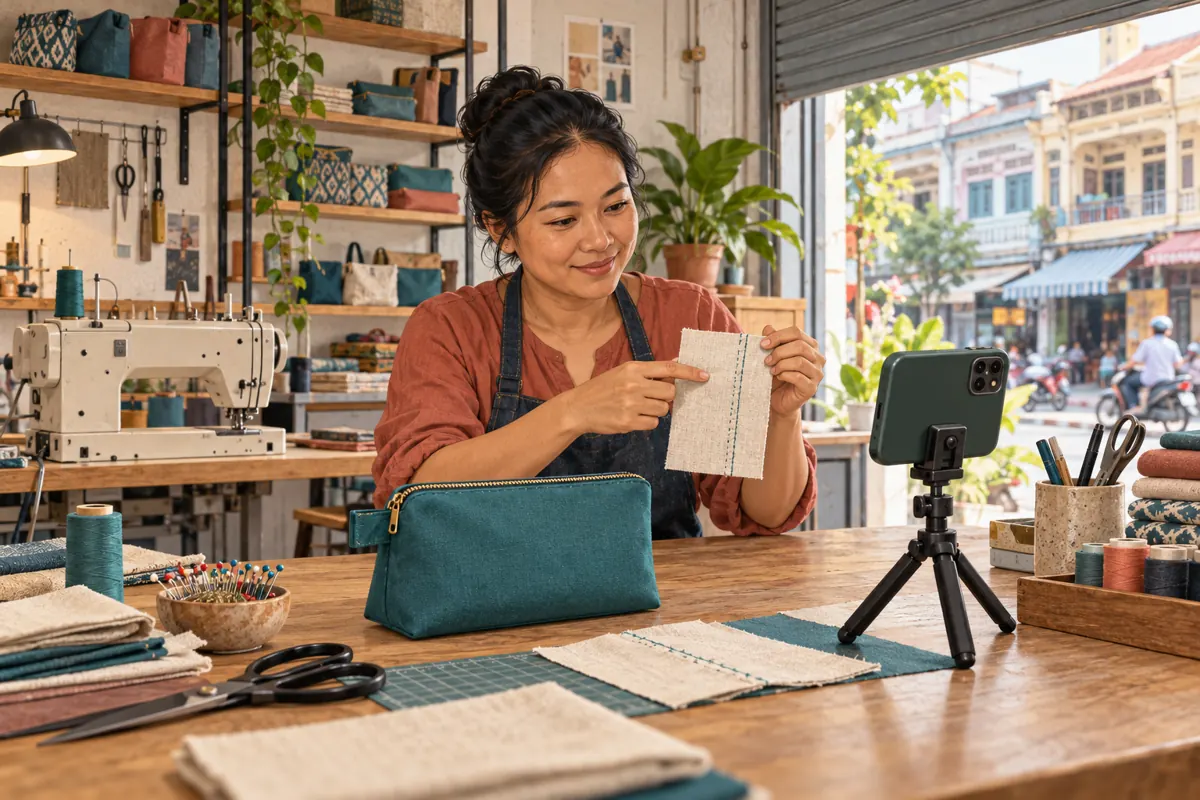
A pouch-making demonstration can look attractive while leaving the most useful detail hidden inside the bag. A viewer might understand the finished shape but still wonder how the lining meets the zipper. For a Cambodian workshop promoting practical lessons, that unanswered question can become the subject of a focused TikTok Stitch. The aim is to connect a visible problem with a clear demonstration, then give interested learners an appropriate next step. This workflow explains how to choose the excerpt, review reuse permissions, protect customer information and assess the response. It also helps SMM-panel customers distinguish a useful teaching exchange from activity that merely changes a counter.
1. Choose a question that needs a visual response
TikTok describes Stitch as combining part of an existing video with a video you create. That makes it useful when the original scene establishes a question and the new recording supplies the explanation. Start with something viewers can actually inspect: a folded lining edge, a bulky corner or a seam that disappears beneath the zipper tape. Avoid opening with a vague request to react to the entire pouch.
Consider a hypothetical Phnom Penh workshop preparing a beginner class. Its instructor wants to explain why the lining catches near the zipper. The content objective is to help viewers identify where the fabric sits before sewing. A response showing that relationship would serve the objective; a general compliment would not. Write the question before filming, and decide what visible evidence would answer it. If a short written reply would resolve the issue just as clearly, there is no need to create a Stitch.
2. Decide whether to invite a Stitch or make one
There are two different starting points. Your workshop can publish a sample and invite others to demonstrate their approach, or it can respond to an existing video whose creator has enabled Stitch. Choose one direction for the initial task. An invitation needs an understandable prompt; a response needs an accurate reading of the original creator’s question.
For the hypothetical workshop, an invitation might ask learners to show the inside seam on a practice sample. A response might demonstrate the same construction using the instructor’s own cloth. Neither requires describing the original creator as a customer. Before responding, watch the full source video and read its caption. A close-up that looks like a mistake may be an unfinished step, a deliberate technique or a question about a different material. If the intended meaning remains uncertain, ask for clarification before making a public correction.
3. Select a sample that can safely leave the workshop
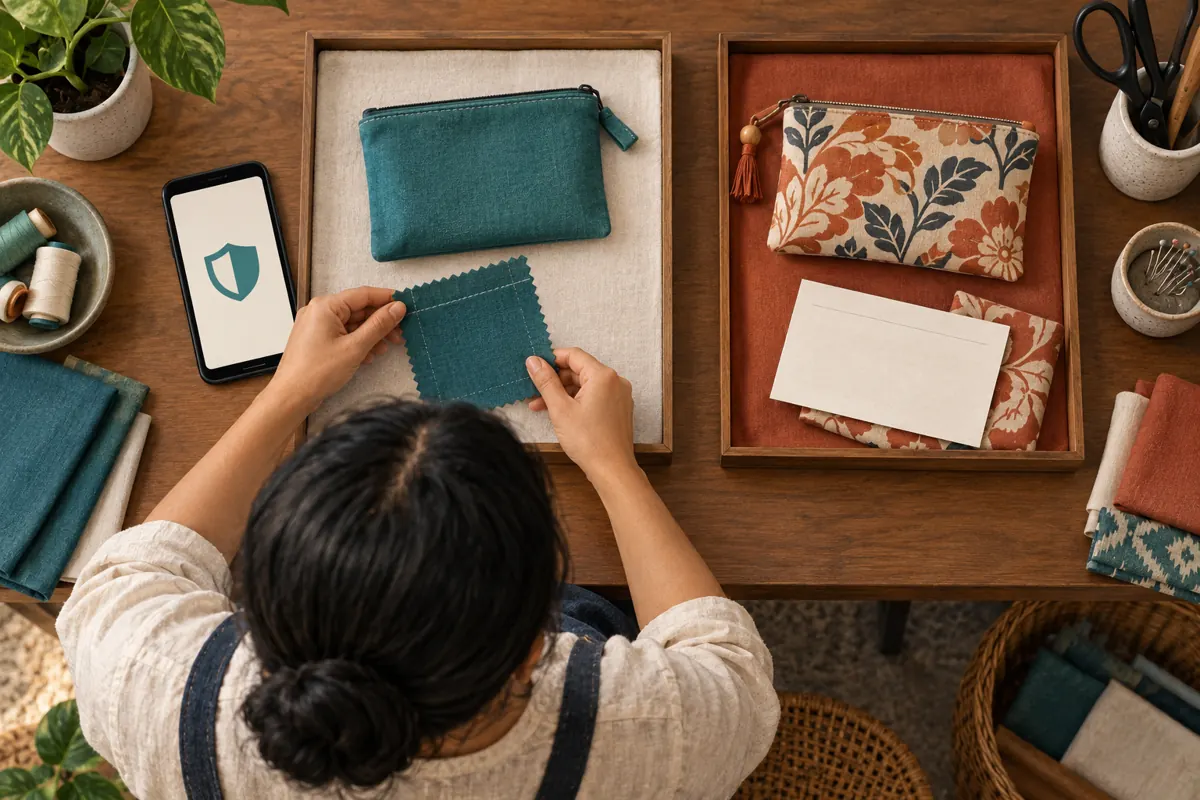
Use a demonstration pouch or an anonymous fabric sample wherever possible. Clear the table of customer names, delivery labels, private measurements and order slips. Check the background as carefully as the seam itself: a whiteboard or packaging label can expose information even when the camera is aimed at the fabric. Obtain agreement from any identifiable person appearing in the recording.
A customer’s permission to have a pouch repaired does not establish permission to use their order in promotional content. Keep a brief internal note describing which sample was approved, who owns the footage and what use was agreed. This is especially helpful when an instructor films and another staff member posts. For a public response, use neutral language such as “this practice sample” unless the customer relationship is established and permission covers that description. A teaching example should not quietly become a testimonial.
4. Make the excerpt understandable by itself
Build the reusable moment around one complete visual idea. Show the relevant part of the pouch, indicate the seam under discussion and state the question together. Do not put an essential condition only at the end of a longer video. If the example applies to an unlined practice pouch, viewers need that context beside the demonstration rather than after several unrelated scenes.
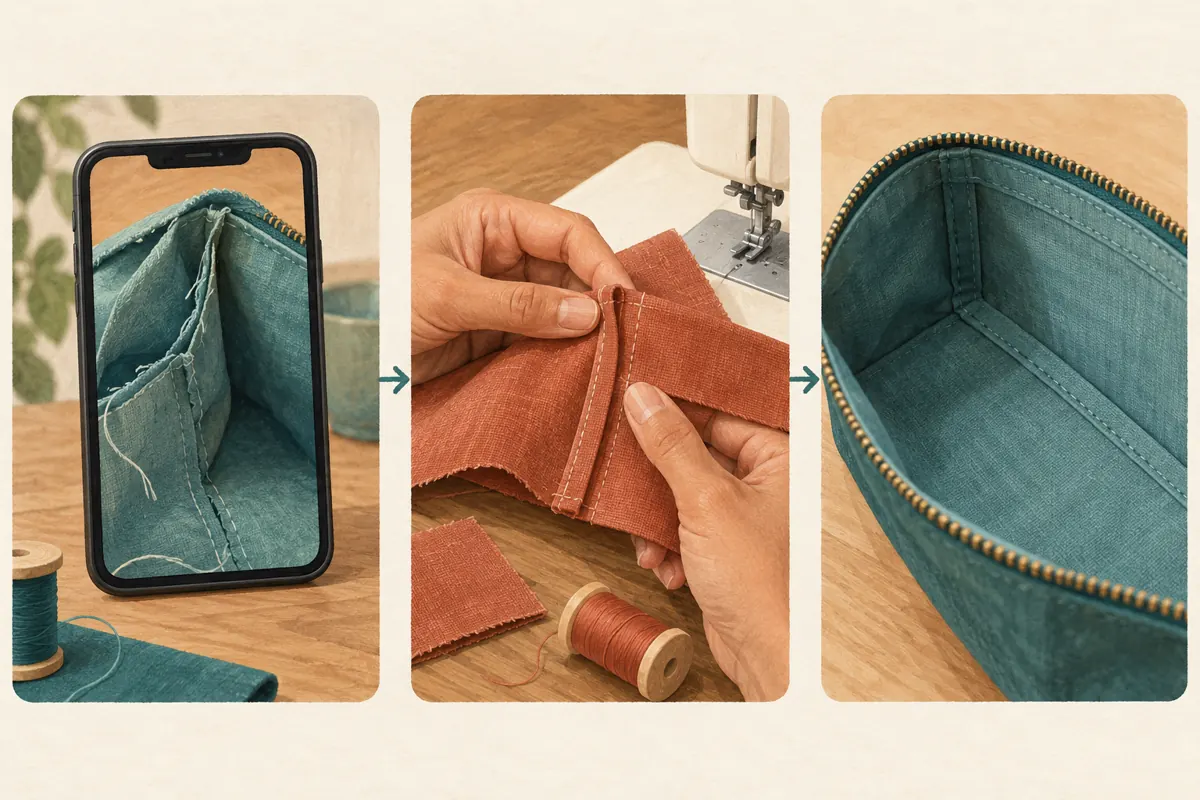
Record a steady close-up with thread that contrasts enough with the fabric to remain visible on a phone. Hold the sample still before rotating it. Avoid covering the exact fold with a fingertip while explaining it. For a Cambodian audience learning in Khmer, use the words the instructor would use in class, then explain any unfamiliar English equipment term. Preview the excerpt without the surrounding footage. A colleague should be able to identify the material, the question and the part they would need to show in a response.
5. Review the broader reuse controls
TikTok’s Stitch privacy guidance says your account must be public to let others Stitch your videos. It directs users through Profile, Menu, Settings and privacy, Privacy, then Reuse of content. The audience choices include Everyone and Friends, meaning followers you follow back. Individual posts also have an Allow reuse of content control, accessible before posting or through an existing post’s privacy settings.
Read the surrounding controls before changing them. TikTok warns that switching off Stitch through this setting also affects Duet, sticker creation and adding the post to another person’s Story. Choose the setting deliberately for the demonstration. Do not make an account public merely to rescue an unsuitable campaign idea. If wider reuse conflicts with the sample’s permissions, film a separate, anonymous teaching example. Record the decision in the content brief so a colleague does not later enable reuse simply because someone requests it.
6. Record a response that preserves the original meaning
TikTok’s creation guide directs you to open the source video’s Share menu, choose Stitch, select the excerpt and continue to record your response. Not every video has Stitch enabled. Use the available preview to check the transition between the original clip and your explanation. The selected moment should represent the question fairly, including any condition necessary to understand it.
For the hypothetical lining example, begin the new recording by identifying the same edge shown in the excerpt. Demonstrate on your own sample, then show the resulting seam from inside the pouch. Explain material differences rather than implying that every pouch behaves alike. If you cannot show the step clearly, record a simpler sample instead of speeding through it. Keep the camera focused on the fabric during the explanation, and remove distracting music or decorative elements that compete with the spoken instruction.
7. Connect the lesson to an honest workshop invitation
A useful demonstration can support promotion without promising that watching it produces professional sewing skills. Explain what the workshop actually teaches and what remains outside the clip. For example, a hypothetical beginner session might cover preparing a practice seam, while zipper installation belongs to a separate lesson. State those boundaries before inviting someone to enquire.
Make the next step specific: ask interested learners to enquire about the beginner pouch session and their preferred teaching language. Confirm the venue, available dates and equipment requirements before including them. Avoid collecting phone numbers or personal booking information in public responses. TikTok’s Community Guidelines require the content disclosure setting when promoting a product, brand or business, so include that check when posting your workshop promotion. Keep participation optional; someone should not need to publish their own sewing attempt to obtain ordinary information about a class.
8. Keep SMM-panel services separate from teaching outcomes
The supplied khmer-boost.com catalogue includes the exact listing “TikTok Video Save ~ Max Unlimited ~ 100k/Days ~ Instant ~ 𝐍𝐎 𝗥𝗘𝗙𝗜𝗟𝗟”. Its title identifies a video-save service, but the supplied description is empty. The wording does not establish who would save the video, whether they understand Khmer, whether they are in Cambodia or whether they intend to attend a workshop. Treat the title’s speed and quantity language as catalogue claims, not independently verified results.
For this workflow, purchasing engagement is not a suitable way to test whether the seam explanation helped. TikTok’s Community Guidelines prohibit services that artificially boost engagement or manipulate recommendations. A purchased save cannot demonstrate learning, genuine interest, sales, advertising delivery or Cambodian audience origin. If you maintain panel-related records, keep them separate from the teaching review and booking records. Direct your effort toward clearer footage, a useful answer and an invitation the workshop can actually fulfil.
9. Review the substance of responses
Assign one person to review responses during a manageable work period. Look for the question each response raises rather than treating every reaction as equally useful. A video showing the inside seam may reveal confusion about fabric orientation. A comment asking whether equipment is supplied concerns the class offer. A private enquiry about a confirmed session belongs in the booking process. These observations require different follow-ups.
Keep a compact review note with the source post, the issue observed, the clarification needed and the next action. Separate direct observation from interpretation. “The learner asks which edge faces the zipper” is an observation; “the lesson is too difficult for beginners” is a broader conclusion requiring more evidence. Do not infer someone’s location from their name, appearance or language. Where a response helps improve the lesson, record the teaching change without turning the creator into promotional proof.
10. Correct common mistakes before repeating the format
Common mistakes include trimming away a qualification, answering a different question, presenting a response as an endorsement and assuming every participant wants their work promoted elsewhere. Another is making the invitation too demanding. Asking beginners to film a finished pouch, explain every step and reveal themselves on camera can distract from the one seam you wanted to discuss. Reduce the request to the smallest useful demonstration.
After the review, choose a concrete next action: improve the close-up, clarify the material, answer a recurring question or stop using the prompt. If nobody responds, do not declare the class unwanted. The effort required to record a public video may simply exceed what viewers want to do. Before removing associated Stitches, read TikTok’s deletion warning carefully: its documented removal process can permanently delete the original video as well. Save an appropriate copy of your own teaching asset and assess the consequences before proceeding.

Frequently asked questions
What should we do if the source video has no Stitch option?
Respect the available permissions. You can ask the creator whether they want to enable Stitch, or make an independent demonstration using your own footage and a general question. Do not download and reupload their clip as a workaround. Their decision not to enable reuse does not prevent you from teaching the underlying sewing concept independently.
Does allowing Stitch mean we approve every response?
No. Reuse permission allows the feature to be used; it does not establish your agreement with someone’s explanation or claims. TikTok notes that the response creator’s privacy settings govern their Stitch. Evaluate any response before referring learners to it, and avoid describing it as workshop-approved unless you have actually reviewed it.
Can we use a learner’s Stitch in a later class advertisement?
Treat that as a separate permission decision. Explain the proposed use, where it would appear and whether the person would be identified. Do not assume that participating in a public teaching exchange means agreeing to appear in a testimonial or another promotional asset. Use your own demonstration if permission is unclear.
What counts as a useful result if saves and views are inconclusive?
Look for evidence matched to the objective: a clearer explanation, a resolved question, or a genuine enquiry about a confirmed session. A booking should be recorded only when the workshop’s normal confirmation process is complete. These observations can guide the next lesson without claiming that the Stitch alone caused a sale.
Explore the current service catalogue, create an account, or ask a specific question through support tickets.
Prepared with AI assistance. Illustrations explain the workflow and do not represent customer results.