20/10/2026 07:03
Where Does the Zipper Measurement Start? YouTube Chapters for Cambodian Sewing-Supply Shops

A customer looking for a replacement zipper may need one detail from a longer demonstration: where the measurement begins. If that explanation is buried between product introductions and colour comparisons, sharing the whole video leaves the customer searching. YouTube chapters can make a useful shop demonstration easier to navigate. For Cambodian sewing-supply businesses, the practical task is to connect each chapter to a question customers actually ask. This workflow covers choosing those questions, placing accurate timestamps, testing the viewing experience and deciding whether the content is ready for promotion. It also explains why an SMM panel order cannot establish that viewers understood the demonstration or intend to buy.
1. Choose a demonstration with separate customer questions
Start with an existing video that answers several related questions. A zipper-selection demonstration might explain the end construction, show how the shop measures a sample, compare visible teeth and describe what information to send with an enquiry. These are useful navigation points because customers may arrive with different problems. A person replacing a jacket zipper does not necessarily need the same explanation as someone buying supplies for a new garment.
Consider a hypothetical sewing-supply shop in Phnom Penh that regularly receives photographs of damaged zippers. Its staff already have a complete demonstration, but they repeatedly explain where individual answers appear. That is a good candidate for chapters. A brief clip showing only one action may need a clearer opening instead. Choose chapters when there are meaningful destinations within the video, rather than dividing footage simply because a certain amount of time has passed.
2. Map the questions before touching timestamps
Watch the finished demonstration once without stopping. Write down the questions it actually answers, then match each question to the relevant passage. Keep the list grounded in visible evidence. If the presenter discusses zipper length but never clearly shows the measurement endpoints, a chapter labelled “Where to measure” would promise more than the footage delivers. Improve that explanation before making it easier to find.
For the hypothetical shop, the working map could contain four questions: what kind of end does this sample have, where is its length measured, what do its teeth look like, and what should a customer send for a stock check? These questions form the editorial structure. They are not a universal zipper-buying guide. A demonstration of selected samples should make its scope clear and leave room for staff to assess the customer's actual item.
3. Place boundaries before the answer begins
Replay each passage and locate the moment a new explanation begins. A useful chapter starts early enough to establish which sample is being discussed. Starting on a close-up halfway through “measure from here” leaves someone who skipped ahead without context. Move the boundary back to the sentence or shot that introduces the object and the task.
Use this hypothetical timing plan only as an illustration: 00:00 identifies the samples, 00:45 introduces zipper ends, 02:00 begins the measurement explanation, 03:30 compares visible teeth, and 05:10 explains enquiry details. The imagined video ends at 06:00. Your own timings must come from your actual footage. Check the final passage as carefully as the earlier ones; an ending consisting only of a closing logo would not substantiate a chapter promising practical enquiry instructions.
4. Add the chapter list using YouTube's documented format
YouTube's official Video chapters guidance gives the setup requirements. In YouTube Studio, select Content, open the video and add timestamps with titles to its description. Begin with 00:00, include at least three timestamps in ascending order and ensure every chapter lasts at least ten seconds. Save the change. YouTube also says that manually added chapters override automatic chapters; creators without chapter access should apply for advanced features.
Keep each timestamp and its title together on a separate line. Before saving, compare the list against the final uploaded version rather than an earlier editing draft. A removed introduction or shortened product comparison can shift every later boundary. Have one staff member prepare the list and another check the actual footage. For a small shop, this can be a brief review on the same phone used to answer customer enquiries.

5. Write labels customers can recognise
Name the answer, not the shop's enthusiasm about it. “Measuring this zipper” tells viewers more than “Important information,” while “Photos to send for a stock check” explains the purpose of the final section. Avoid labelling a general comparison “Find your exact replacement” unless the video really provides enough information to identify one. Chapter titles should help viewers choose a passage without implying a product guarantee.
Use the language your intended customers understand. A Cambodian shop with a Khmer-speaking presenter can write its actual chapter labels in Khmer and preserve genuine product codes where needed. If staff use several names for the same component, agree on a consistent term before publishing. Test the wording with someone who handles enquiries but did not edit the video. Ask what they expect to see after choosing each label, then compare that expectation with the footage.
6. Test every chapter as a fresh arrival
Open the saved video on a phone and enter each chapter without first watching the preceding section. Listen to the first complete sentence and inspect the opening shot. Can you identify the sample? Are the measuring endpoints visible? Does the presenter refer to “the previous one” without showing it? Record specific problems such as “the ruler enters after the explanation” instead of a vague note saying the chapter feels confusing.
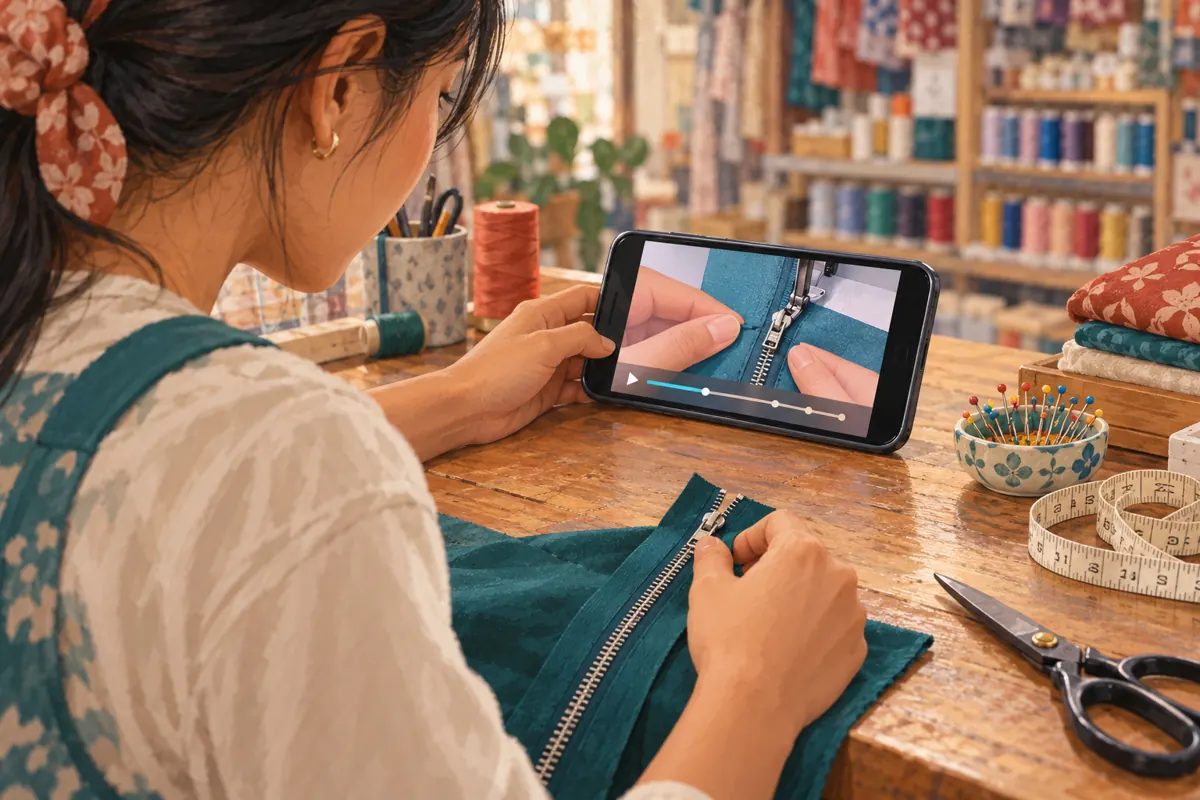
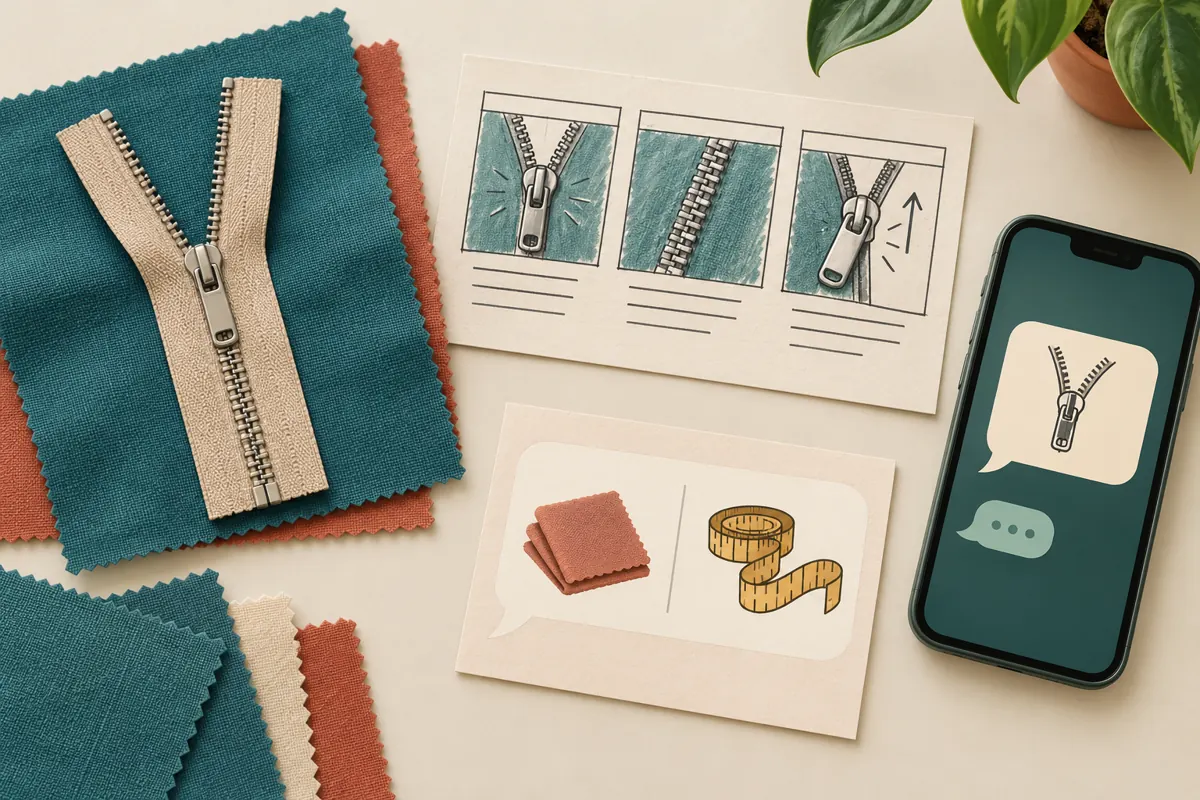
Also test the task under ordinary viewing conditions. Check whether a person holding a zipper sample can pause the demonstration and compare the relevant detail. If the image is too wide, a better timestamp will not make the measurement readable. Reframe or reshoot where necessary. Treat the illustrations accompanying this article as conceptual aids; actual product decisions require the shop's own accurate footage and an assessment of the customer's item.
7. Make the next enquiry specific and manageable
A useful demonstration should lead to a clear next step. For the hypothetical shop, that could be asking customers to send a photograph of the full zipper, a close-up of its end and the measurement shown in the guide. Request only information staff need to assess availability. Explain that the shop must confirm compatibility and stock before the customer travels or pays.
Prepare a short staff reply that names the relevant chapter and explains why it matters. For example: “Please watch the measurement section, then send a photo showing the same endpoints on your zipper.” Adapt the wording to the customer's language. Do not send the same video automatically when a photograph already reveals that it covers a different product. The purpose is to reduce uncertainty, not make every enquiry pass through a compulsory viewing step.
8. Review SMM services against the actual task
For readers using khmer-boost.com, a catalogue entry is not evidence that a service can solve a navigation problem. One supplied public listing is “YouTube - Subscribers - 𝐁𝐎𝐓 ~ Max 10k ~ 10k/day ~ Instant ~ 𝐍𝐎 𝗥𝗘𝗙𝗜𝗟𝗟”. Its name identifies a subscriber offering and explicitly uses the word BOT. The supplied description is empty, so its wording does not provide independently verified delivery terms or evidence of Cambodian viewers.
YouTube's Fake engagement policy prohibits artificial increases in views, likes, comments and other metrics. It also explains that a hired promoter's actions can affect the channel. Do not purchase artificial engagement for this workflow or promote such services in the video's description. Purchased engagement cannot demonstrate genuine interest, sales, advertising delivery or audience origin. Spend effort on accurate footage, understandable navigation and relevant distribution; the supplied catalogue does not establish that a chapter-editing service is available.
9. Share the guide in a context where it answers something
Once the chapter entry points work, introduce the video through the shop's existing customer-facing channels with a specific explanation of its usefulness. A post might say that the guide shows the information needed before asking about a replacement zipper. Avoid implying that every featured colour or size is currently available. Keep educational information separate from a stock offer that may change.
For a hypothetical shop serving tailors outside Phnom Penh, staff could use the guide when a remote enquiry lacks a clear measurement. They should still answer the question in the message and explain what to send next. Repeatedly posting the same link in unrelated groups is a poor substitute for relevance. When sharing in a community, follow its rules and make the contribution useful even to readers who are not ready to order.
10. Review understanding and maintain the chapter map
After staff have used the guide, collect concrete observations. Did customers still measure different endpoints? Did they confuse the zipper sample with the garment opening? Did a chapter title lead someone to the wrong comparison? These observations suggest what to improve. Record them without copying unnecessary personal details from customer conversations, and distinguish a staff interpretation from something the customer explicitly said.
Do not treat a rise in views as proof that chapters caused more enquiries or sales. A changed product range, a separate promotion or seasonal demand could also affect activity. Review the guide whenever footage changes, and assign someone to check its chapter boundaries after an edit. Keep a small record of the video address, chapter wording, review date and unresolved content issues so the next staff member can maintain it accurately.
Frequently asked questions
Should every product in a comparison get its own chapter?
Only when each product has a substantial, distinct explanation that viewers may need separately. If the presenter switches rapidly between samples to explain one difference, keep that comparison together. Excessive divisions can separate a question from its answer and make the chapter list harder to scan.
What if the best measurement explanation starts halfway through a sentence?
Begin the chapter at the preceding introduction if it establishes the necessary context. If that still leaves viewers confused, revise the footage. A clean entry point should identify the sample and explain the action. Moving a timestamp cannot repair an explanation that never names what is being measured.
Can the shop use English product codes inside Khmer chapter titles?
Yes, as an editorial choice, retaining genuine product codes can help staff and customers distinguish samples. Keep the surrounding wording understandable and use the same code in the demonstration and enquiry process. Avoid filling titles with unexplained abbreviations that only the supplier recognises.
Does a customer who watches the measurement chapter count as a qualified buyer?
No. Someone may be learning, comparing options or repairing an item without buying anything. Treat a customer as making a specific enquiry only when they actually ask about a requirement. Even then, confirm the product details, availability and ordering conditions before recording a sale.
What should staff check after the demonstration is shortened?
Replay all chapter entry points against the revised video, including sections that appear unchanged. Earlier cuts can move later answers. Update the labels if an explanation has been removed or narrowed, then test the customer-facing reply so it still directs people to the intended information.
Explore the current service catalogue, create an account, or ask a specific question through support tickets.
Prepared with AI assistance. Illustrations explain the workflow and do not represent customer results.