20/10/2026 13:28
What Did Your Poll Leave Out? Telegram Suggested Options for Cambodian Plant-Pot Shops

A plant-pot shop can offer several demonstration topics and still miss the question customers actually have. Staff may plan videos about colours and drainage holes while shoppers want to know whether their existing nursery pot will fit inside a decorative container. Telegram polls that accept additional options can help uncover that missing question. For Cambodian businesses planning social media promotion, the useful outcome is a clearer filming decision, not simply a busier poll. This workflow explains how to invite suggestions, handle overlapping answers, choose a practical demonstration, and keep any SMM panel activity separate from evidence about customer needs.
1. Start with one decision the shop can actually make
In a hypothetical Phnom Penh plant-pot shop, the owner has time to film one short demonstration before the next delivery arrives. Staff propose measuring the opening, checking the drainage hole, and choosing a saucer. The decision is which explanation to film first. It is not which products to reorder, how many buyers will visit, or whether a new collection will sell.
Write that decision before opening Telegram. A focused question might ask which pot-fitting step viewers would like demonstrated next. Explain that suggestions should describe something the shop can show using its current stock. This boundary helps people contribute useful ideas without creating an expectation that every request will become a video. Assign one staff member to review suggestions and another to confirm that the chosen demonstration is accurate.
2. Understand what an open-answer poll changes
Telegram's March 2026 announcement, AI Editor, Mighty Polls, Live Photos, Bots Managed by Bots, and More, confirms that polls can let participants suggest additional options while voting is active. Its technical documentation calls these open-answer polls. This gives the audience a way to introduce an answer the shop did not anticipate.
Treat the feature as a discovery tool. A fixed list tests reactions to the choices you supplied; an expandable list can reveal that your starting choices were incomplete. Before using it publicly, create a small staff test in the current official app. Locate the setting that permits additional options, submit a harmless sample suggestion, and check how it appears to another participant. If your available interface does not expose the setting, collect ideas through your normal enquiry route and prepare a fixed shortlist instead.
3. Prepare starter options that teach people how to answer
Give each starter option a concrete action. In the hypothetical shop, suitable choices are measuring the pot opening, checking whether a saucer fits underneath, and comparing the height of an inner pot with an outer pot. Avoid broad choices such as quality, price, or everything. Those words do not tell the person filming what needs to appear on camera.
Keep the options similar in scope. A detailed request about rim clearance should not compete with a category as broad as plant care. Use the language your actual customers understand, and have a fluent colleague check Khmer wording where needed. If the shop commonly uses an English product term, pair it with a clear local explanation. Do not create separate options that merely translate the same idea; that splits one topic across two answers.
4. Explain the rules before inviting additions
The accompanying message should state the purpose, the scope of acceptable suggestions, and when staff will review the result. Ask participants to check existing options before adding another. Remind them that public suggestions should contain a demonstration topic, not a phone number, delivery address, order reference, or complaint about an identifiable customer.
For the hypothetical shop, an English working draft could read: Choose a pot-fitting step you want us to demonstrate. If your question is missing, add one short topic about measuring or fitting pots. Please check the existing choices first. We will review the suggestions on Friday afternoon, Cambodia time, and confirm what we can film. This wording invites participation while preserving a necessary feasibility check. Translate it naturally for the audience rather than copying a stiff instruction into the public post.

5. Review additions without rewriting the audience's meaning
Check the poll at planned intervals while someone is available to respond. Sort the ideas in a private working note into distinct topics, possible duplicates, and requests outside the announced scope. In this hypothetical example, measuring the inside opening and measuring the clear space below the rim may sound similar but describe different problems. Ask for clarification before treating them as identical.
Telegram's poll documentation says the poll creator can delete added options and that additions or removals generate service messages. Do not assume this is a silent editing process. Explain necessary removals briefly, particularly when an option contains private information or is unrelated to the question. Avoid deleting an inconvenient but relevant suggestion merely because it challenges the shop's planned content. If the list becomes confusing, preserve a private record and prepare a clearly explained second round.
6. Account for late suggestions and duplicate choices
A suggestion introduced near the end has had less opportunity to attract attention than the original options. Its smaller total therefore does not automatically make it less useful. Record when a material new idea appeared and consider whether enough participants had a reasonable chance to notice it. This is a practical interpretation issue even when every vote was voluntary.
If overlapping answers or late additions make the result difficult to interpret, run a separate shortlist poll with clear, distinct wording. Explain that the first round collected ideas and the second helps set the filming priority. Do not silently combine totals and announce a new winner: people may have interpreted the original choices differently. For a small content decision, another poll may be unnecessary. Staff can instead choose a feasible topic and explain honestly how audience suggestions informed that choice.
7. Turn the selected question into a filming brief
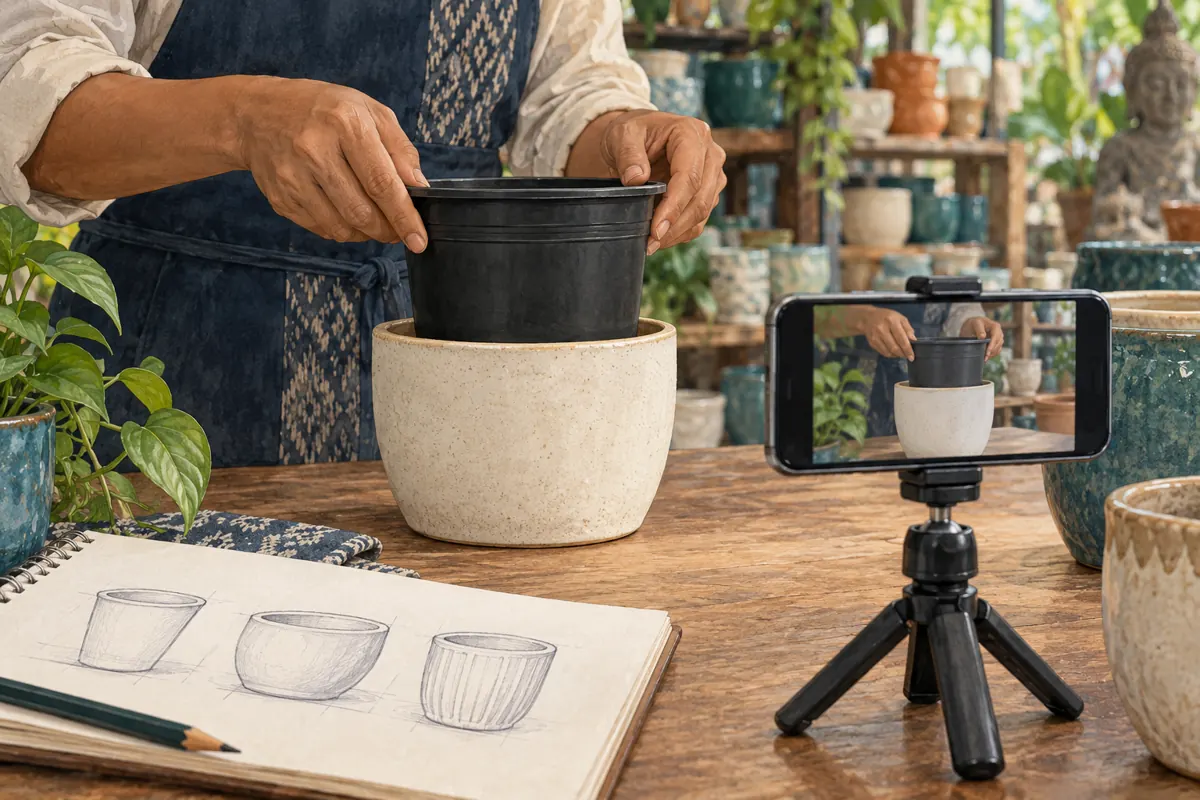
Suppose the hypothetical shop selects a newly suggested topic: checking whether a nursery pot fits inside a decorative pot. Write a brief that identifies the exact containers, the uncertainty to resolve, and the shot that will resolve it. Show the opening, the inner pot's widest relevant point, and how the two pieces sit together. Keep any measurements tied to the actual items shown.
Include a useful failure case if suitable samples are available. A pot may pass through the opening but sit too high, or its rim may prevent it from lowering fully. Showing that distinction can make the explanation more useful than a polished shot of a perfect fit. Finish with a precise enquiry instruction, such as asking viewers to send the relevant pot dimensions privately. Avoid presenting one demonstrated pairing as proof that every container in the collection will fit.

8. Keep SMM services outside the research result
The supplied khmer-boost.com catalogue includes the exact public service name Telegram - 𝗔𝘂𝘁𝗼 Views ~ Instant ~ [𝗡𝗲𝘄 𝗣𝗼𝘀𝘁 / 𝗢𝗹𝗱 𝗣𝗼𝘀𝘁]. Its title identifies an automatic-view service associated with new or old posts, but the brief provides no description. That is insufficient to confirm supported post formats, targeting, delivery behaviour, or whether a poll is eligible. The title's timing language is a catalogue claim, not a verified delivery promise.
If considering that listing, ask support to clarify the documented scope before submitting anything. No service in the supplied examples establishes a poll-voting capability. Purchased engagement is not evidence of genuine interest, sales, ad delivery, or Cambodian users. Keep service orders and delivery records outside the worksheet used to interpret voluntary suggestions. A view total cannot establish that someone understood the fitting problem, wanted the proposed demonstration, or intended to buy.
9. Promote the finished answer with honest context
When the demonstration is ready, introduce the specific question it answers. If accurate, say that the topic came from a suggestion in the shop's poll. Avoid describing it as what Cambodian customers want or the most requested solution unless the evidence supports that narrower statement. Participants are a self-selected group, and a useful suggestion does not establish the preferences of a whole market.
Share the finished explanation through the shop's existing social channels with the product reference and a clear next step. Keep any stock or availability statement current. Record subsequent enquiries separately: did someone ask about their own pot dimensions, request a particular item, or simply thank the shop for the explanation? These observations help refine the next video. They should not be added together as though every interaction represented the same level of buying intent.
10. Avoid the shortcuts that make the poll harder to use
The first common mistake is asking an unrestricted question such as what should we post. It invites requests that cannot be compared or delivered within the available filming time. Another is supplying only promotional choices, such as favourite colours, when customers need a practical explanation. Start with the uncertainty that prevents someone from choosing or using the product.
A third mistake is promising to film the highest option regardless of feasibility. Check samples, staff knowledge, and filming conditions before confirming the final topic. Finally, do not abandon the conversation after collecting ideas. Publish a short follow-up explaining what you selected, why it is useful, and where viewers can find the answer. Retain unresolved suggestions with a simple note about the missing information or materials. That makes the next planning session easier without repeatedly asking customers the same question.
Frequently asked questions
Should every shop poll allow people to add options?
No. Use additional options when discovering missing questions is valuable and someone can review the contributions. A fixed list is more suitable when the available choices are already complete, such as choosing between two demonstrations that are both ready to publish. Opening the list creates review work, so match the format to the decision rather than enabling it automatically.
What if the most useful suggestion arrives just before review?
Consider its practical value separately from its vote total. Check whether it answers a recurring uncertainty, whether the shop can demonstrate it accurately, and whether earlier participants had a chance to see it. You can carry it into a fresh shortlist or select it with a transparent explanation. Do not claim it won if it did not.
Can votes on similar options be combined in the final report?
Keep the original results intact. You may group related topics in an internal planning note, but explain that this is your interpretation. Adding totals can obscure differences in wording and, where multiple selections were possible, may count the same participant more than once. A new shortlist is clearer when the combined interpretation would determine a public winner.
Does buying Telegram views help validate the demonstration topic?
Purchased views do not validate a topic or establish the preferences of Cambodian buyers. The supplied automatic-view listing also provides no description confirming poll compatibility. Evaluate the demonstration through the substance of voluntary questions and subsequent enquiries. If a service is considered for separate promotional activity, document its scope and keep its delivery figures out of customer-research conclusions.
What should a shop do if almost nobody responds?
Check whether the question is understandable and whether the choices describe problems people recognise. Ask willing customers during ordinary conversations which fitting step confuses them, without pressuring them to participate online. You can still make a useful demonstration from a well-understood question. Describe that editorial choice honestly instead of presenting a quiet poll as strong evidence of demand.
Explore the current service catalogue, create an account, or ask a specific question through support tickets.
- Telegram: AI Editor, Mighty Polls, Live Photos, Bots Managed by Bots, and More
- Telegram API: Polls and quizzes — Open-answer polls
Prepared with AI assistance. Illustrations explain the workflow and do not represent customer results.